

CLICK HERE to see our FREE guides on all things real estate, interior design, and construction
6th Avenue Homes

Journal Buying & Selling

10 Moves to Buy Your Dream Fort Worth Home in 2026

8 min read

Whether you’re actively home hunting or just dreaming on Zillow, the Fort Worth home-buying process can feel intimidating — especially in a 2026 market with 7% rates and a $320K median. Here are the ten moves that consistently put Fort Worth buyers in a better position to get the house they actually want, updated with current numbers, DTI targets, closing costs, and Texas-specific realities.

Whether you’re actively looking to buy a Fort Worth home or spending your evenings on Zillow imagining what could be, the home-buying process can feel intimidating. Real estate is complicated. Financing is more complicated. And in a 2026 market where mortgage rates are running near 7% and the Fort Worth median home price sits around $320,000, the stakes on every decision feel real.

Here’s the good news. After guiding thousands of people through the Fort Worth home-buying process, we’ve found that most of the biggest wins come from a handful of specific moves — often made months or even years before you tour your first house. This is our updated 2026 version of the ten moves that consistently put Fort Worth buyers in a better position to get the house they actually want.

You may not be ready to buy today. That’s fine. The moves below work best when they compound over time. Start now and you’ll thank yourself when you’re standing in your dream home in 2027 or 2028.

Check Your Credit Report

Better credit means better mortgage interest rates. On a $350,000 loan at 2026 rates, the difference between a 640 FICO and a 740 FICO can easily be 0.5% to 1.0% in rate — which translates to $100 to $200 more per month, or $36,000 to $72,000 over the life of a 30-year loan.

For some, improving credit feels like an uphill battle. But the cheapest, fastest win is simply reviewing your credit report for errors. Studies from Consumer Reports and the CFPB have found that roughly 1 in 3 Americans discover mistakes on their credit report — anything from an incorrect balance to an account that doesn’t belong to them.

You’re entitled to a free credit report from each of the three major bureaus (Equifax, Experian, TransUnion) every week at AnnualCreditReport.com. If you find something wrong, dispute it with the bureau in writing. A single corrected error can move your score by 20-40 points.

Automate Your Bill Payment

Payment history is the single biggest factor in your FICO score — about 35% of the total calculation. One late payment (30 days or more) can drop your score by 50-100 points. Two of them within a year and you’re in a different mortgage rate tier entirely.

The fix is boring and effective: set up automatic payments on every recurring bill you have. Credit cards, utilities, subscriptions, student loans, car payments — all on autopay. Even the most organized people miss a deadline occasionally. Autopay eliminates the risk.

Start a Dedicated Down Payment Savings Account

If you know you want to buy a Fort Worth home in the next 1-5 years, open a dedicated savings account for the down payment now and start transferring money to it every month automatically.

The 2026 down payment minimums:

  • FHA loans: 3.5% down (still the standard for first-time buyers with lower credit)

  • Conventional loans: 3% down for first-time buyers, 5-10% down typically for others

  • Conventional without PMI: 20% down

On a $320,000 Fort Worth home, that’s $9,600 (3%) to $64,000 (20%). Even a small monthly transfer — $500 a month over three years — puts you at $18,000 plus interest.

Two rules: separate account from your normal checking, and an automatic transfer that doesn’t require you to think about it. And a promise to yourself that this money doesn’t get touched for anything except your down payment.

Prepare for Closing Costs

The down payment isn’t the only cash you need at closing. Fort Worth buyers should plan for 2-5% of the purchase price in closing costs on top of the down payment.

On a $320,000 home, that’s $6,400 to $16,000. Line items typically include:

  • Appraisal fee ($500-$700)

  • Home inspection ($400-$700)

  • Loan origination fees

  • Title insurance

  • Underwriting fees

  • Recording fees

  • First-year homeowners insurance premium (up significantly in Texas — $3,000-$6,000 for a typical Fort Worth home in 2026)

  • Property tax prorations (Texas property taxes are among the highest in the country)

  • Escrow reserves

Some costs are negotiable — in the current buyer’s-leverage market, sellers are covering closing costs more often than they were three years ago. Some are non-negotiable. Knowing what to expect keeps closing day from being the surprise it is for most first-time buyers.

Shop Around for Interest Rates

The lower your interest rate, the less you pay for your home over the life of the loan — and in 2026’s rate environment, even a quarter-point difference matters a lot.

On a $300,000 mortgage over 30 years:

  • 7.0%: about $1,996/month, $418,527 in total interest

  • 6.75%: about $1,946/month, $400,624 in total interest

  • 6.5%: about $1,896/month, $382,822 in total interest

That’s roughly $18,000 saved for every quarter-point drop.

Never accept the first loan offer without exploring others. Start with your bank or credit union (you may qualify for a relationship discount). Then get quotes from at least two more lenders — a mortgage broker who shops multiple carriers, a mortgage-specific bank, and possibly an online lender. Ask each for a Loan Estimate on the same day so you’re comparing apples to apples.

Decrease Your Debt

Your debt-to-income ratio (DTI) is exactly what it sounds like — the amount of debt you carry compared to the income you bring in. Lenders look at it hard, and it’s one of the first factors that determines whether you qualify for a mortgage.

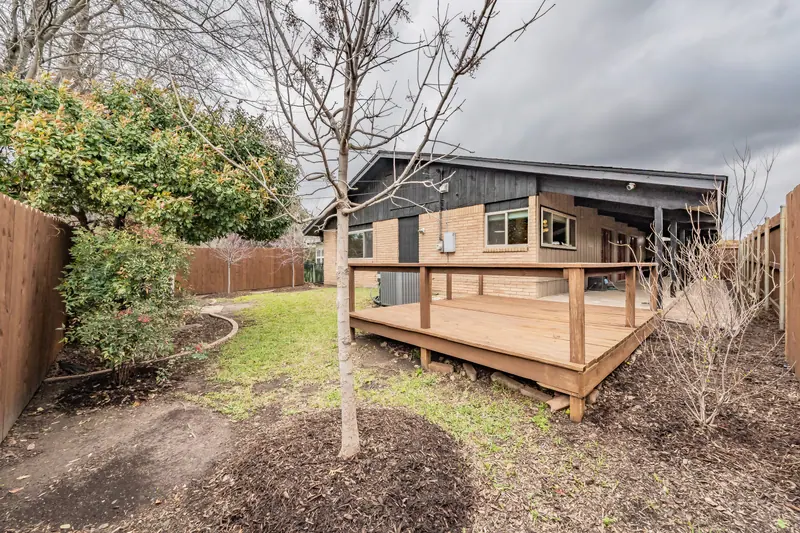
Start now and you’ll thank yourself when you’re standing in your dream home in 2027 or 2028.

The 2026 DTI targets:

  • Conventional loans: 43% or lower is the sweet spot (some go up to 45% with strong compensating factors)

  • FHA loans: up to 50% with compensating factors

  • Best rates: typically require DTI at 36% or lower

To decrease your DTI, look at every credit account you have and make a plan to pay down balances before you apply. Priority order: high-interest credit cards, store cards, personal loans, auto loans (if refinancing makes sense), and student loans (income-driven plans can lower the monthly payment counted in DTI).

Every $100 of monthly debt payment you eliminate raises your Fort Worth buying power by roughly $16,000-$18,000 in home price at current rates.

Increase Your Income

The other side of the DTI ratio is income. If you’re seriously thinking about buying a Fort Worth house in the next 12-24 months, it’s worth considering opportunities to increase your take-home pay.

That might mean shopping around for a new job (job changes with pay bumps show up on lender documentation once you have two paystubs at the new employer). It might mean asking for a raise at your current job. It might mean starting a documented side hustle — lenders typically want to see two years of consistent 1099 income before counting it toward qualifying income.

The more documented income you have coming in, the smoother your home financing process will be.

Diversify Your Assets

Lenders look at your liquid and semi-liquid assets when considering your loan application. They want to see that in a financial emergency, you’d still be able to make your mortgage payments.

Assets that count include: checking and savings accounts, retirement accounts (401K, IRA), brokerage accounts (stocks, bonds, ETFs), CDs and money market accounts, ownership in real property, and vehicles in some contexts.

Diversifying across multiple account types shows lenders financial stability. It also protects you personally: if the stock market takes a hit right as you’re trying to close, you don’t want all your down payment sitting in equities that just dropped 15%. Aim to have your down payment in cash or cash equivalents at least 60 days before you plan to close.

Brainstorm Sources of External Support

You may want to be the one who purchases your dream home, but external support can get you there faster. In 2026, gifted down payment funds are more common than most first-time buyers realize.

Some options:

  • Parents or grandparents offering gift funds (the annual tax-exempt gift limit is $19,000 per person in 2026)

  • A parental interest-free loan (documented as a loan or a gift, depending on lender rules)

  • Redirecting birthday and holiday gifts to a down payment fund

  • Texas Department of Housing (TDHCA) down payment assistance programs

  • City of Fort Worth first-time buyer programs (worth checking each year — availability shifts)

  • FHA-approved gift funds from close family members

Get creative. Don’t be ashamed to ask. Imagine how excited you’d be to help a friend or family member if you were in a position to do so.

Meet With a Guide

If you’re anything like our clients, you value the ability to talk through complicated subjects with a real person who understands your situation and has the knowledge to make the process feel approachable.

Our team of Fort Worth Realtors and lending partners specializes in exactly this. We take the time to understand your goals, map out a clear path forward, and guide you through the journey to home ownership — step by step, at your pace.

Free consultation, like always. Whether you’re 12 months from buying or five years out, the conversation is worth having now. The moves in this list work best when they compound over time.

Frequently Asked Questions

How much do I need to save for a down payment on a Fort Worth home? Minimum 3% for a conventional loan or 3.5% for FHA. On the current $320,000 median Fort Worth home price, that’s $9,600 to $11,200 minimum. Aim higher if possible — 20% down eliminates PMI and gets you the best rates.

What credit score do I need to buy a house in Fort Worth? Most conventional lenders require 620+ minimum. FHA loans can go as low as 580. The best rates in 2026 typically require 740+.

How long does the home buying process take in Fort Worth? From accepted offer to closing typically runs 30-45 days. From starting your home search to being in the house runs 60-120 days for most buyers.

Can I buy a house in Fort Worth with no down payment? Yes, in specific cases. USDA loans (for rural areas) and VA loans (for eligible veterans) offer 0% down. Some down payment assistance programs can also cover the down payment for qualifying buyers.

Should I wait for interest rates to drop before buying? See our recent post on why “waiting for the market to settle” often costs more than it saves. Short version: you can refinance the rate later. You can’t refinance the price of the house.

Buying & Selling

Thinking about it for your own house?