

Fort Worth · Selling
Sell your Fort Worth home
You want it sold, at a price you can live with. Selling takes a series of decisions. Here they are, starting with the one that costs the most.
Or call or text (817) 631-9803
Top Agents & Producers — Fort Worth Magazine, Real Producers and 360 West, five years running. Small Business of the Year from the Fort Worth Chamber of Commerce. Historic Preservation Awards from the Greater Fort Worth Association of Realtors.






The next sixty days
Showings can come on short notice, and strangers will walk through your home.
What happens while your Fort Worth home is for sale
For a few weeks or a few months, you share your house with anyone who wants to see it, often on a Saturday afternoon. That’s the part people ask us about most.
You’ll also make about six decisions along the way. Your agent brings you what each one needs — the comps, what the showings turn up, the numbers behind an offer. They’re yours to make, and they should be.
What you receive
A range, and the sales behind it
What you decide
Where in it you start
Pricing at the top of the range and pricing at the bottom lead to different results. You decide where to start.
What you receive
The first weekend
What you decide
Whether to wait, or move
How many came, and how many came back. The second number is the one that tells you something.
What you receive
What buyers’ agents said
What you decide
What’s worth changing
Some of it is a pattern. Some of it is one person who wanted a different house.
What you receive
An offer, or several
What you decide
Which one, and what to counter
Price is one line of it. Financing, dates and what the buyer’s asking you to cover are the rest.
What you receive
The repair request
What you decide
Agree, counter, decline, or credit
The biggest money decision in the sale, and the one you get the least warning about.
Read this one firstWhat you receive
The appraisal
What you decide
Hold, reduce, or ask them to cover it
The lender orders it, and it doesn’t have to match your contract.

After the inspection
What to do when the buyer sends a repair request
The inspection happens. Then an amendment comes back listing what the buyer wants fixed. You have four ways to answer, and a deadline set by your own contract.
Agree
You take the list on, or pay for it, and the contract holds. The cleanest path, and the priciest one if the list is long.
Counter
You take some of it and leave the rest. It’s where a lot of these land. Sellers usually agree to fix what the next buyer’s inspector would flag anyway.
Decline
You can say no. Inside the option period the buyer can walk for any reason at all. After it, their reasons narrow to what the contract still gives them — financing, the appraisal, their lender. So know whether the option period has ended before you answer.
Credit
You pay at closing instead of doing the work, and the buyer picks their own finishes. A lender may cap what a credit can cover.
These describe how the standard Texas contract works. Your dates are the ones in your own paperwork, and your agent walks you through them.

Your agent brings you the amendment, the deadline that goes with it, and what each of the four answers does to the deal you already have.

Our construction team prices the work before your deadline to answer, so you answer with a real price for the work.
Which move is right comes down almost entirely to one figure: what the work would cost. Here you have that number before you answer.
Selling a house that needs work
Four ways to sell a house that needs work
It may sell for less than a finished one. It will still sell. What changes is which of these four options you choose, and they’re rarely laid out side by side.

List it as it stands
Price it for what it is and let buyers decide what it’s worth to them. There are buyers out there looking for a house they can change, and they’ll pay for the chance to change it.
A project worth doing
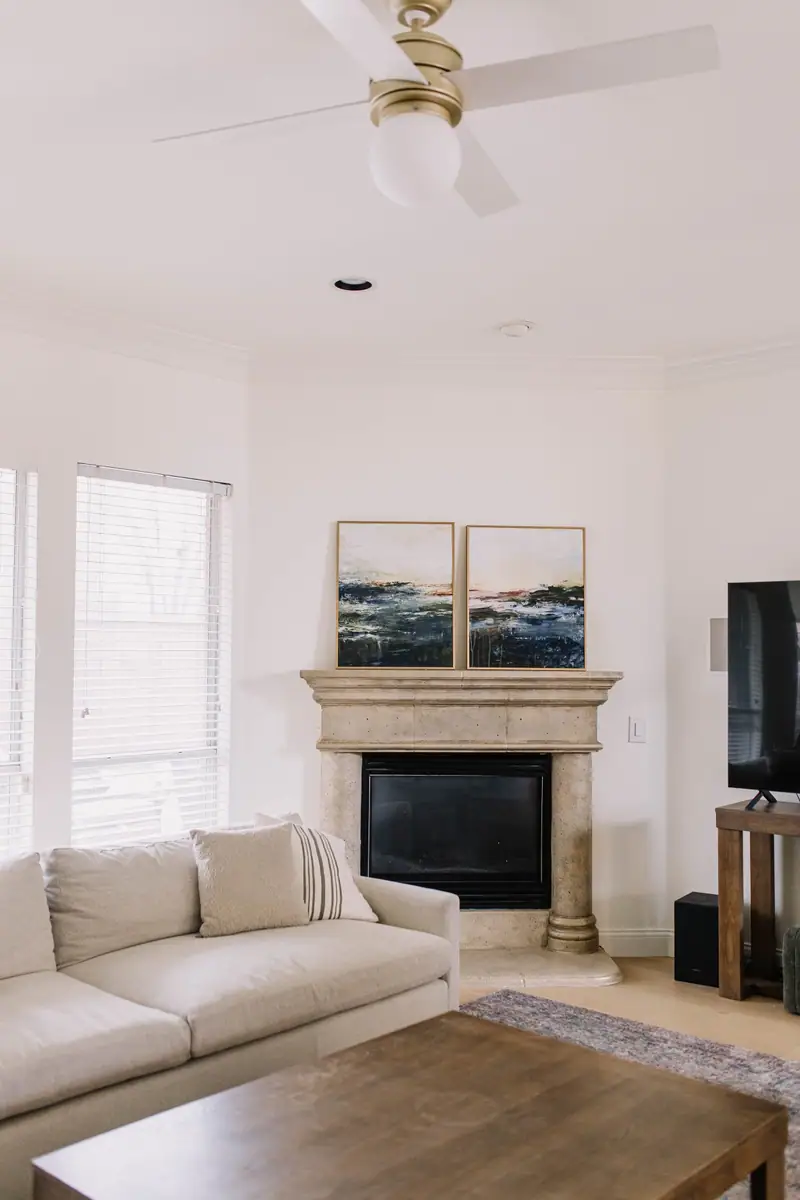
Sometimes redoing a kitchen or a bath raises the price range a house sells in. Our construction team prices it, and says plainly when it wouldn’t.
See what that looks like ›
Do the short list first
A weekend of paint-and-caulk work you can line up yourself, and worth more than it costs. The list is shorter than most people think, and we wrote it all down.
What to fix, and what to skip ›Sell it to an investor
There are buyers who’ll take it as it stands, quickly, for less. It’s occasionally the right call — and it’s the one path here that doesn’t end with us listing your house. If it’s yours, we’ll say so.
Before you sign anything
What comes out of the check
The sale price isn’t what you walk away with, and the gap surprises people. These are the categories. Any listing agent can run your own figures against them.
The sale price
where it starts
What is left on the mortgage
The payoff figure, which runs higher than the balance on your last statement — it carries interest through your closing date.
Brokerage compensation
What your listing agreement says, and what, if anything, you’ve agreed to contribute to the buyer’s side.
Title and closing charges
The title policy, the escrow fee, recording. Your title company itemizes every line of it.
Tax prorations
Texas property taxes are paid in arrears, so at closing you settle up for the part of the year you owned the house.
HOA resale and transfer fees
If you’re in one. The association sets the amount and quotes it to title.
What you agreed to in the contract
Repairs you took on, a credit you gave, a survey, a home warranty. Every decision above lands here as a number.
What you walk away with
yours
Ask for a net sheet before you accept an offer rather than after. It’s a line-by-line estimate of what you’d walk away with, and it’s an ordinary thing to ask a listing agent for.
Common questions
Questions about selling a home in Fort Worth
Contract mechanics below describe how the standard Texas contract works. Your own dates are negotiated and they live in your paperwork — a listing agent walks you through yours.
Do I have to make the repairs a buyer asks for?
No. A repair request is a request. You can agree to it, agree to part of it, decline it, or offer a credit at closing instead. What changes your leverage is where you are in the option period, which is a date in your contract.
What happens during the option period if I am the seller?
The buyer has bought the right to walk away for any reason, for a number of days you both negotiated. The inspection usually happens early in it and the repair request near the end of it. Your job in that window is to answer, and to know your own dates.
What if the appraisal comes in under the contract price?
Three of your options: hold your price and let the buyer cover the difference in cash, meet the appraised number, or land somewhere between. Which is realistic depends on the buyer’s financing — and a buyer whose contract still gives them an appraisal or financing out has their own options.
Should I fix it, or sell it as-is?
Both work. A house that needs work sells to people who want to change it; a short list of small repairs usually pays for itself; a bigger project sometimes raises the price range and sometimes doesn’t. We’ll price the work and tell you which of those you’re looking at.
What comes out of my check at closing?
Your mortgage payoff, brokerage compensation, title and closing charges, tax prorations, HOA resale fees if you are in an association, and anything you agreed to in the contract. Ask for a net sheet before you accept an offer — it puts your actual figures against each of those.
Can I sell if I still owe on the house?
Yes — it’s the ordinary case, not the exception. The payoff comes out of the proceeds at closing and the title company handles it. What matters is whether the sale price covers the payoff plus the costs above, which is exactly what a net sheet shows you before you commit to anything.
Start with what your house is worth › How we list a house in Fort Worth ›

Your home’s value
Find out what your house is worth
Every decision on this page gets easier once you know what your house is worth. Send us an address and we’ll get you the number.
Our agents list homes across Fort Worth, Tarrant County and out into Parker, from the two offices in Fort Worth and Mansfield: Tanglewood · Mira Vista · Ridglea Hills · TCU & Westcliff · Arlington Heights · Overton Park · Crestline · Monticello · Park Hill · Aledo · Mansfield · Fairmount.