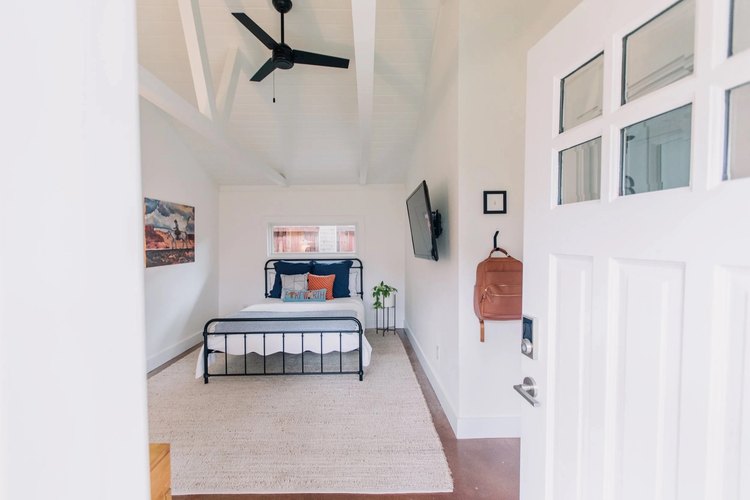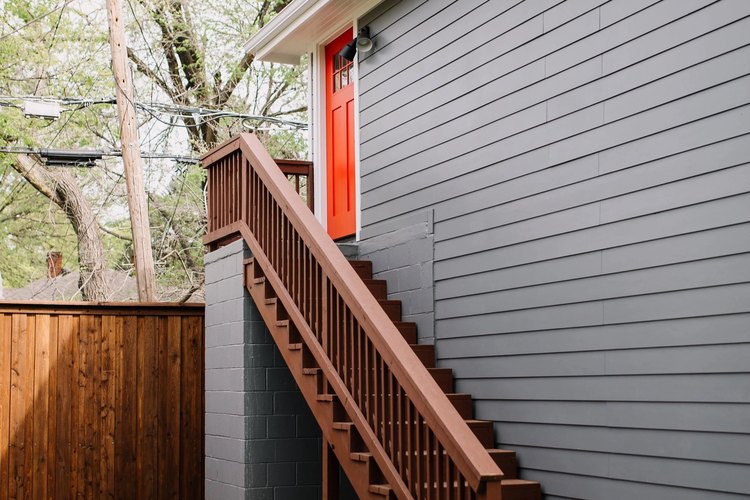
Somewhere in your neighborhood, on a lot you've probably driven past a hundred times, there's a backyard that's about to become a small, beautiful, second home. A garage being quietly converted into a one-bedroom apartment. A detached cottage going up behind a 1940s bungalow. A mother-in-law suite designed for an aging parent, with its own entrance and its own porch.
This is happening more and more across Fort Worth. And in 2025, the legal ground underneath all of it shifted in a meaningful way that most homeowners haven't fully registered yet.
If you've ever stood in your backyard and thought "we could build something out here," the rules just changed in your favor. Let's walk through what that actually means.
What an ADU Actually Is
ADU stands for accessory dwelling unit. It's a fancy zoning term for a smaller, secondary home that shares a lot with a primary house. Think: garage apartment, backyard cottage, in-law suite with its own kitchen and entrance, converted detached structure.
It is a legal second dwelling. Not a guest room. Not an unpermitted Airbnb cabin. Not a glorified shed with a bed in it. A real, permitted living space with a kitchen, a bathroom, a door to the outside, and a Certificate of Occupancy.
People build ADUs for three big reasons, and they're almost always some combination of all three:
Rental income — a long-term tenant, a midterm furnished rental, or short-term where local rules allow.
Multi-generational living — aging parents, adult children figuring out life, a sibling in transition, a family member who needs proximity without sharing the same kitchen.
Flexible workspace — a real home office, a studio, a creative space, somewhere to actually focus that isn't fifteen feet from the kitchen.
What you'll notice as you walk through these reasons is that all three are answers to questions most modern families are quietly asking. Where do my parents live when they're older? How do I help my adult kid without housing them inside my house? Where do I work? What if I could earn extra income from my own backyard?
Ten years ago, the answer to most of those questions was "you can't." In Fort Worth in 2026, increasingly, the answer is "yes — and the city is starting to make it easier."
What Fort Worth Currently Allows
Under the Fort Worth Unified Development Code, ADUs are permitted in most residential zones. The basic guardrails as of this writing:
The maximum size of a detached ADU is the lesser of 50% of your primary dwelling's floor area or 900 square feet. So if you own a 2,000 square foot home, you can build up to a 900 square foot ADU. If you own a 1,500 square foot home, you're capped at 750 square feet. Height generally can't exceed the primary house and typically tops out around 25 feet, which is plenty for a one-story or modest two-story unit.
You're allowed one ADU per single-family lot. That's it. No backyard duplex situations.
Importantly — and this is a real differentiator from some other Texas cities — Fort Worth does not require the property owner to live on-site in most zones. Some cities (we're looking at you, Austin) require the owner to occupy either the primary or the ADU. Fort Worth doesn't. That makes the city friendlier to investors and to homeowners who might move and want to keep the property as a long-term rental in both units.
Permit timelines for a clean application are running about 3 to 6 weeks right now. Permit and utility connection fees typically come in somewhere between $2,000 and $8,000 depending on scope.
What Changed at the State Level in 2025
The Texas Legislature spent the 2025 session quietly doing something it hadn't really done before — siding with housing supply, repeatedly, across multiple bills. The ones that matter most for ADUs and small-lot housing:
SB 15 — effective September 2025 — prevents larger Texas cities, including those in Tarrant and Dallas counties, from requiring oversized lots in new subdivisions. It's a minimum-lot-size reform, and it makes smaller, more flexible lot configurations legal in jurisdictions where they used to be banned outright.
HB 24 raised the threshold for triggering a supermajority city council vote on zoning protests from 20% to 60% of nearby property owners. In plain English: it's now significantly harder for a handful of neighbors to block reasonable development with a protest petition. That has knock-on effects for everything from ADUs to small infill projects to neighborhood-scale density.
There were several other bills aimed at making it easier to legally build housing on existing residential land, allow residential use in some commercial zones, and address occupancy rules. Implementation varies by city, and Fort Worth's full local response to the state-level changes is still settling in — so for any specific project, you'll want to confirm the current state of local rules with Development Services before you start drawing plans. But the headline is real: the political wind in Texas has shifted toward making it easier, not harder, to build housing on land you already own.