Walk through a typical DFW garage on a Saturday afternoon and tell us what you see.
Probably two cars (or one and a half — one car and a lot of stuff). A workbench someone built in 2014 and hasn't used since 2016. Eight Rubbermaid bins of things. A Christmas tree in a box. A bike with a flat tire. An old dresser that didn't quite make it to Goodwill. A garage door opener that occasionally works.
You're sitting on 400 to 700 square feet of square footage that you paid for, that your insurance covers, that your property taxes include, and that is currently functioning as a slightly-better-than-outside storage unit.
In Texas, where summer makes that garage 130 degrees by noon and winter occasionally turns it into a refrigerator overnight, that space is basically unusable for half the year. It's not even good storage. The temperature swings ruin half of what's in there.
What if you fixed that?
We've spent the last three years doing garage transformations all over DFW, and we've come to a strong conclusion: the garage is the most under-utilized real estate in the average American home. The fix isn't always expensive. Sometimes it's not even complicated. Let's walk through what's possible.
First, the Texas Garage Problem in Numbers
An uninsulated DFW garage on a 100-degree day climbs to 130 to 140 degrees by mid-afternoon. That's not an exaggeration — that's measured. The garage door faces west on a lot of homes, soaking up direct afternoon sun. The roof above the garage usually has a vented attic that radiates heat down. The concrete slab holds heat well into the night.
In that environment, you can't store paint (separates). You can't store electronics (degrades). You can't store certain medications, certain musical instruments, certain photographs, leather goods, vinyl records, candles, or anything else that doesn't love 130-degree heat. Most homeowners learn this slowly, item by ruined item.
You also can't do anything active in that space — work out, woodwork, run a home office — without significant intervention. Which is why most Texas garages function as a place to park, a place to keep tools, and a place where stuff lives because nowhere else is convenient.
The fix is climate control. And once you get to climate control, a whole set of other possibilities opens up.
Step One: Insulate The Thing
The single most cost-effective garage upgrade in DFW is insulation. Specifically, spray foam in the walls and ceiling, and an insulated garage door if yours isn't already.
Spray foam insulation runs $1.50 to $4.50 per square foot. For a typical two-car garage of 450 to 500 square feet of wall and ceiling area, you're looking at $3,000 to $8,000 for a full insulation job. Closed-cell foam (the $3 to $4.50 stuff) gives you R-5 to R-7 per inch and creates an air-sealed barrier. For Texas climate zone 3, you want R-13 to R-21 in the walls and R-30 to R-40 in the ceiling.
An insulated garage door — if you're replacing the door anyway — runs $1,000 to $1,800 installed for a single-car door and $1,800 to $3,200 for a double-wide. If you're not replacing the door, you can install an insulation kit yourself for $300 to $500.
The temperature impact is dramatic. A properly insulated garage that hits 130 degrees today will hit 85 to 95 degrees with no AC — just from the insulation alone. With a mini-split, you can hold it at 75. That's the difference between "unusable storage" and "second living space."
Step Two: Add a Mini-Split
A ductless mini-split is the right HVAC solution for a garage. It doesn't tie into your home's central system (which is sized for the conditioned square footage of the house, not the garage). It's efficient. It's relatively quiet. And it heats and cools.
For a 400-to-600 square foot DFW garage, you need a 12,000 to 24,000 BTU unit. Installed cost in DFW for 2026 is $3,500 to $5,000 for a single-zone system, sometimes more if you need electrical panel work to support it.
If you need to upgrade your panel — most older DFW homes have 100-amp service, and a garage with AC, lighting, outlets, and potentially an EV charger pushes you toward 200-amp — that's another $1,500 to $3,000.
Total for "make this garage usable in any weather" — call it $7,000 to $15,000 in insulation, mini-split, and electrical, depending on the starting point. That's the base layer for everything else.
What People Are Actually Building In Their Garages
Here's the fun part. Once the garage is climate-controlled, the possibilities open up. The four most common transformations we see right now:
The home gym. This is the runaway #1. A garage gym build-out — rubber flooring at $3 to $8 a square foot, mirrors at $5 to $10 a square foot installed, a mini-split for climate control, a slatwall storage system for equipment, and a few hundred dollars of electrical for outlets and lighting — runs $6,000 to $12,000 total. Add equipment ($3,000 to $15,000 depending on how serious you are) and you've replaced an annual gym membership for the rest of your life. The payback on a quality garage gym in DFW is real. Most clients tell us it's the best money they ever spent on the house.
The home office. Garage offices became a thing during COVID and have stayed a thing. The construction is more involved — you're essentially building a finished room. Insulation, drywall and finishing, flooring (vinyl plank or LVT is most common), proper lighting, decent windows or skylights, climate control, and good electrical for a workstation. Full conversion to a real office space runs $15,000 to $40,000 in DFW for 2026.
Important note: converting a garage to permanent living space in Fort Worth and Dallas requires a building permit, plus electrical and possibly plumbing permits if you add a bathroom. Expect 2 to 3 weeks of permitting, plus inspections during the build. There are also code requirements — egress windows if it's a bedroom, smoke and carbon monoxide detectors, proper insulation R-values, ventilation. Do not let anyone talk you into a non-permitted conversion. It tanks your home value, creates legal issues at sale, and can void insurance coverage if something goes wrong.
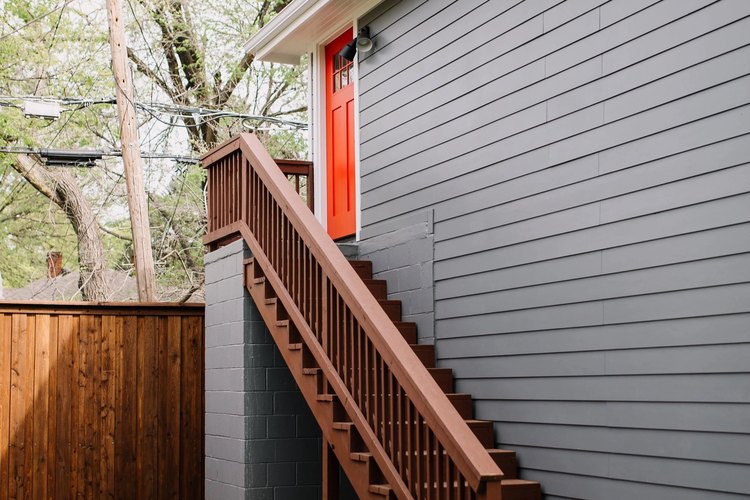
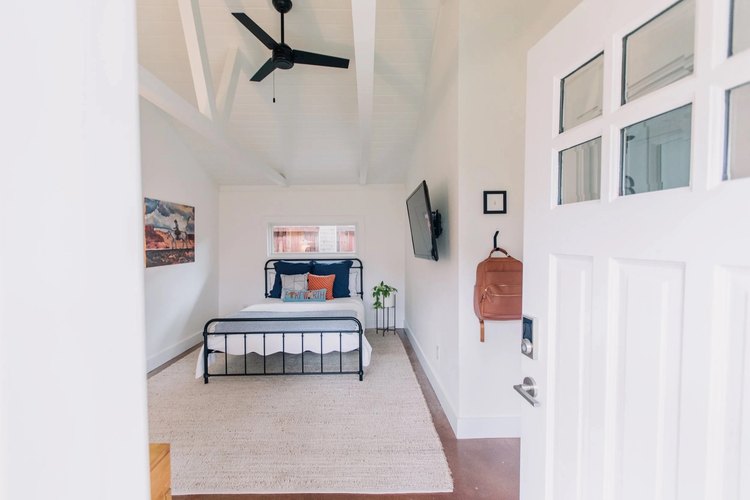
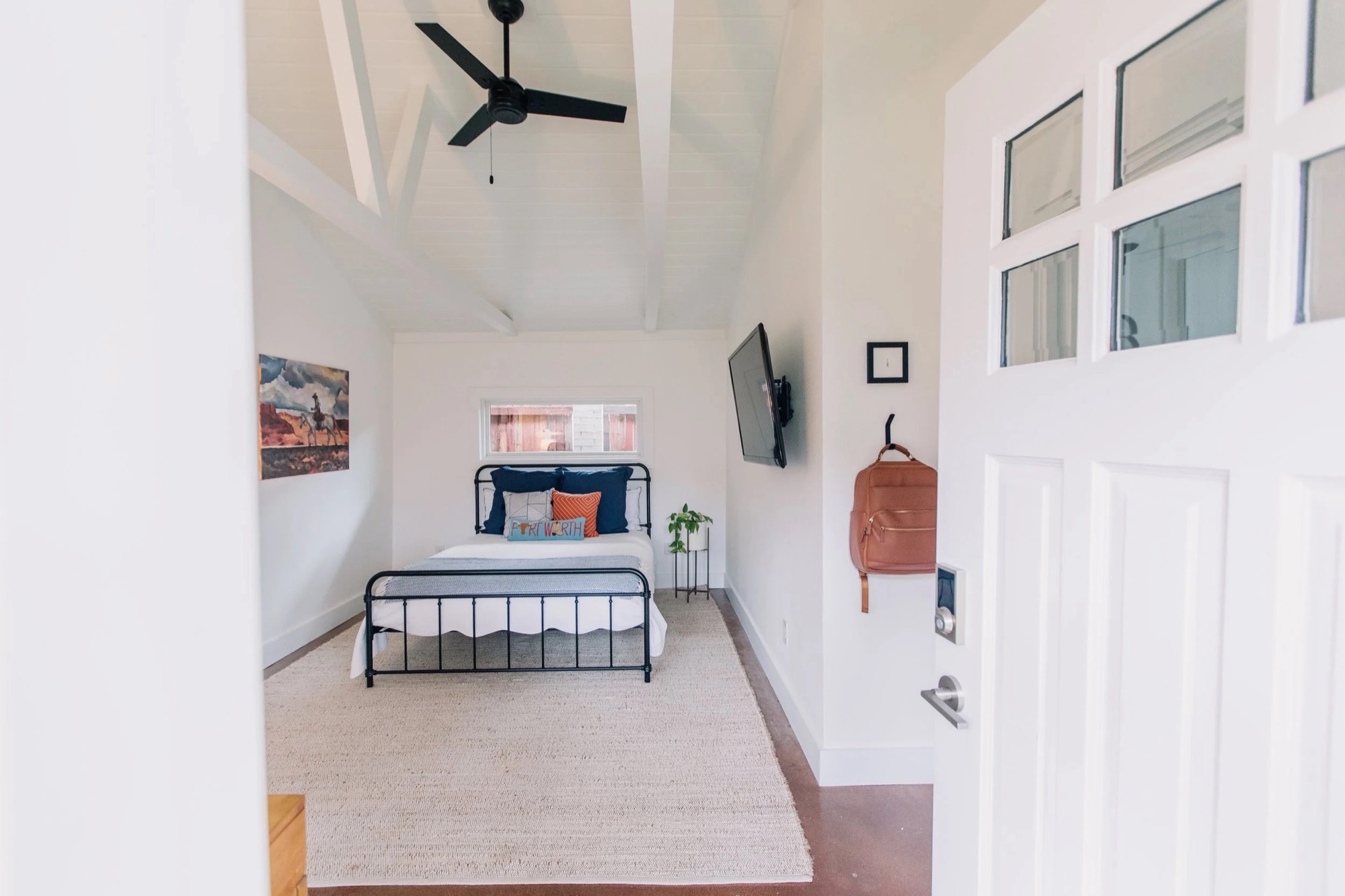
The garage as ADU / casita. With Texas SB 673 making ADUs significantly easier to permit by-right in single-family zoning, the garage-to-ADU conversion is having a moment. A full conversion — kitchenette, bathroom, sleeping area, separate entrance, possibly separate metering — runs $40,000 to $80,000+ in DFW. That's a real investment, but you're adding a rentable or relative-housing unit to your property. The rental income or the family flexibility (aging parent, adult child, long-term guest) tends to justify the spend.
The mudroom / drop zone. The simplest upgrade, and arguably the most life-changing in a family with kids. Take the first 6 to 8 feet of garage immediately inside the door from the house and turn it into a real mudroom — built-in cubbies, a bench, hooks for backpacks and jackets, a tile or vinyl plank floor, decent lighting, maybe a built-in shoe organizer. Construction cost runs $3,000 to $10,000 depending on the level of finish. The "first six feet of the garage" becomes a real entry zone, and the house stays cleaner because nobody's tracking soccer cleats and backpacks through the kitchen.