
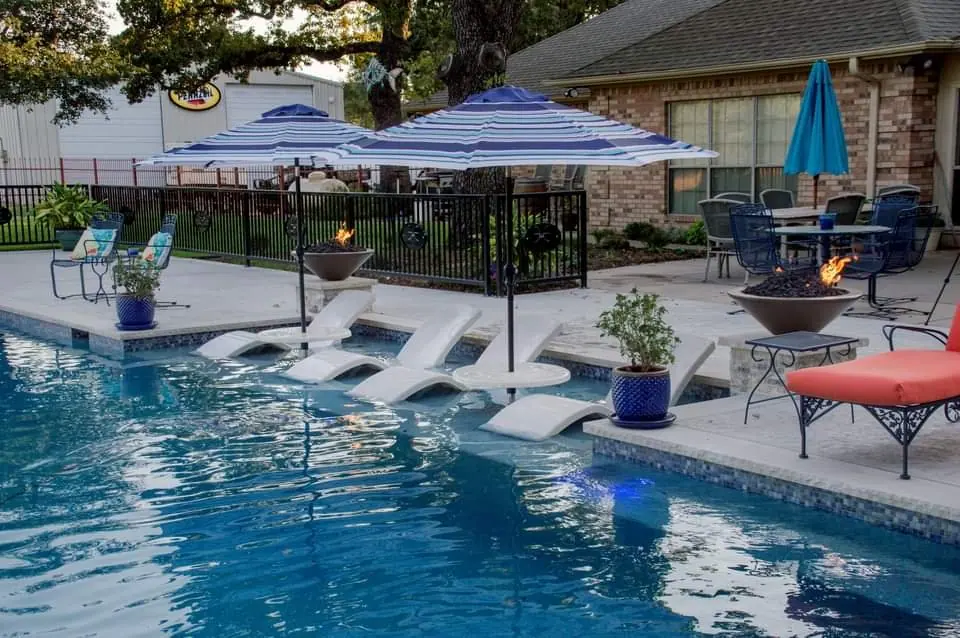
Pools · Fort Worth
Fort Worth pool permit and barrier rules
A pool in Fort Worth takes a building permit, and an outdoor pool needs a barrier at least 48 inches tall.
Or call or text (817) 631-9803
From the City of Fort Worth’s codes and its residential pools packet, read November 7, 2026.
The permit
Do you need a permit for a pool in Fort Worth?
Yes. The City lists swimming pools among the structures that take a building permit. The one pool its administrative code lets you put in without one is a prefabricated pool of 5,000 gallons or less, installed entirely above ground. Skipping the permit doesn’t skip the barrier: the City’s residential code counts any pool holding water more than 24 inches deep, above ground or in it, and an outdoor one needs a barrier.
| Kind of pool | Building permit | Barrier |
|---|---|---|
| An in-ground pool | Building permit Yes | Barrier Yes |
| A spa or hot tub built into the ground or the deck | Building permit Yes | Barrier Yes, unless it has a listed safety cover |
| A prefabricated above-ground pool, 5,000 gallons or less | Building permit No | Barrier Yes, if the water is more than 24 inches deep |
| A larger or site-built above-ground pool | Building permit Yes | Barrier Yes, if the water is more than 24 inches deep |
The City’s zoning rules also decide where on the lot an accessory structure like a pool can sit.
Planning a pool with a whole backyard around it? Price it as one plan.
The barrier
Fort Worth’s pool barrier requirements
The City’s residential code wants a permanent fence or wall all the way around an outdoor pool, one you can’t lift out without a tool. A 4-foot fence isn’t a pool barrier until its gaps, pickets, gate and latch meet the numbers below. The height and the gap at the bottom are measured on the outside, the side away from the pool.
48 inches
the least a pool barrier’s top can sit above the ground, measured outside
- The top: at least 48 inches above the ground, measured outside
- The bottom: no more than 2 inches above the ground, measured outside
- Any opening: too small for a 4-inch ball to pass
- Pickets: no more than 1¾ inches apart when the rails are less than 45 inches apart, rails on the pool side
- The gate: opens out, away from the pool, closes and latches itself, and takes a lock
- A latch less than 54 inches from the bottom of the gate: on the pool side, at least 3 inches below the top, with no gap over ½ inch within 18 inches of it
| What | The rule | Section |
|---|---|---|
| Height | At least 48 inches, measured on the side away from the pool | AQ105.2(1) |
| Gap at the bottom | 2 inches at most, measured on the side away from the pool | AQ105.2(1) |
| Openings | No 4-inch sphere can pass through | AQ105.2(2) |
| A solid wall, stone or masonry | No handholds or footholds | AQ105.2(3) |
| Rails less than 45 inches apart | Rails on the pool side; pickets no more than 1¾ inches apart | AQ105.2(4) |
| Rails 45 inches or more apart | Pickets no more than 4 inches apart | AQ105.2(5) |
| Chain link | Mesh no larger than 2¼ inches square, or slats that bring the openings to 1¾ inches | AQ105.2(6) |
| Lattice | Openings no more than 1¾ inches | AQ105.2(7) |
| A walk-through gate | Opens outward, away from the pool; self-closing and self-latching; takes a lock | AQ105.2(8) |
| Other gates | Self-latching; takes a lock | AQ105.2(8) |
| A latch release less than 54 inches from the bottom of the gate | On the pool side, at least 3 inches below the top of the gate; no opening over ½ inch within 18 inches of it | AQ105.2(8.1, 8.2) |
| Anything near the barrier | Nothing permanent placed where it can be used to climb it | AQ105.4 |
| An above-ground pool’s own wall as the barrier | 48 inches all the way around; the ladder or steps lock, come off, or sit inside a barrier of their own | AQ105.2(10) |
The pools packet says pools follow the 2018 International Swimming Pool and Spa Code with the City’s amendments; the numbers above are the ones the City wrote out in its residential code. Where a number isn’t in the City’s own text, it isn’t on this page.
Planning a pool? We draw the barrier with the backyard, not after it.
The back door
When the wall of your house is part of the barrier
When the house closes one side of the pool, the City’s residential code counts that wall as part of the barrier. A door or a low window in it opens straight onto the water, so the code asks for one of three things.
- An alarm on every door that leads straight to the pool through that wall, and on every window whose sill is less than 48 inches above the floor, that sounds when the door, window or screen opens
- A listed and labeled safety cover on the pool or spa
- Another means of protection the City approves, such as self-closing, self-latching doors, that protects at least as well
Covers are where the City’s two documents part ways. Its residential code exempts a spa or hot tub with a safety cover to the ASTM F1346 standard from the barrier rule. For a pool, it lets a cover stand in only for the house-wall alarms. Its amendment to the pool code goes further and exempts a pool with a powered safety cover to the same standard. Ask the City which one your permit is reviewed under before you count on a cover instead of a fence.
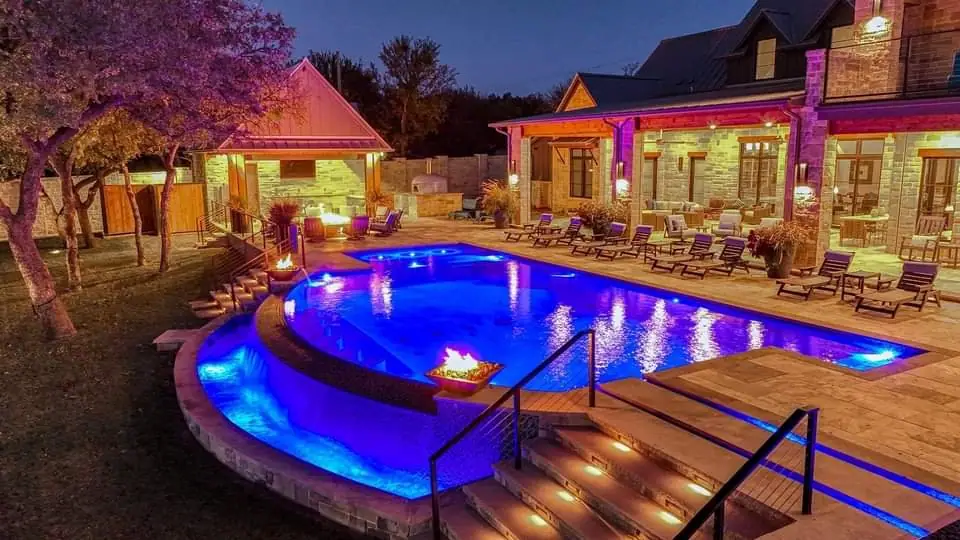
Is your back door a few steps from where the pool would go? Bring that to the estimate.
On the lot
How close can a pool be to your house in Fort Worth?
Under the City’s residential code, a pool sits at least one foot from the house’s foundation for every foot of pool depth. The same 1-to-1 holds for the footing of a retaining wall. And the pools packet says an accessory structure can’t go in the front yard.
- Closer than its depth
- Only on a design by an engineer registered in Texas, with sealed engineered drawings submitted for approval
- 5 feet or more from the foundation
- One section of the code (R401.5) lets it go; the other (R327.1.1) has no such exception, so ask the City before you plan on it

Custom pools are built by independent contractors we partner with, not by an in-house crew. Everything around the water is ours, and it gets designed with the water rather than after it. The barrier is part of that: we draw it into the plan, so it reads as part of the yard instead of an afterthought. Do we handle permits for pools? Yes, including the required pool safety fencing and barrier codes the City enforces. Custom pools · Pools and outdoor living
Before you dig
How to get a pool permit in Fort Worth
Call 811, get the electric company to sign off on the plans, submit the City’s pool packet, and plan for the City’s steel inspection.
-
Call 811. The City’s pools packet puts the call on the pool contractor or the homeowner: Texas Excavation Safety System (TESS) marks the buried lines before pool plans are submitted. 811 by phone, or Texas811.org.
-
Get Oncor’s sign-off. The packet says the plans must be stamped and signed off by Oncor Electric before you submit them.
-
Submit the packet. It asks for, among other things: a copy of your lot’s recorded plat; a site plan showing the front, side and rear setbacks, your neighbors’ front setbacks, the lot lines and easements, all dimensioned, with a north arrow and a scale; the construction plans; and the entrapment form, which every residential pool and spa permit needs.
-
Plan for the steel inspection. The City’s inspector checks the pool’s piping and outlet spacing while inspecting the steel.
What the permits cost · How the permit process works · Your setbacks
Want the pool, the barrier and the backyard on one plan? Start with the walkthrough.
Questions
Fort Worth pool permit and barrier questions
Planning a pool? Bring these questions to us.
Do I need a permit to build a pool in Fort Worth?
Yes. The City’s Residential Permitting page lists swimming pools among the structures that take a building permit, and the City’s pools packet asks for your lot’s plat, a site plan, construction plans, an entrapment form and the electric company’s sign-off on the plans.
Do I need a permit for an above-ground pool in Fort Worth?
Not if it’s a prefabricated pool of 5,000 gallons or less, set entirely above ground, at a house. A bigger or site-built one takes a permit. Either way, if the water is more than 24 inches deep, the City’s residential code wants a barrier. The pool’s own wall can be the barrier if it’s 48 inches tall all the way around and the ladder or steps lock, come off, or sit inside a barrier of their own.
How tall does a pool fence have to be in Fort Worth?
At least 48 inches, measured on the outside, with no more than 2 inches between the ground and the bottom of the fence. No opening can let a 4-inch ball through, and the picket spacing depends on how far apart the rails are.
What does a pool gate need in Fort Worth?
A walk-through gate opens outward, away from the pool, closes and latches on its own, and takes a lock. If the latch release is less than 54 inches from the bottom of the gate, it goes on the pool side, at least 3 inches below the top of the gate, with no opening over half an inch within 18 inches of it.
Can the back of my house be part of the pool barrier?
Yes, if the doors and low windows in that wall are covered one of three ways the City’s residential code lists: an alarm that sounds when a door, a window with a sill under 48 inches or its screen opens; a listed safety cover on the pool or spa; or another protection the City approves, such as self-closing, self-latching doors.
Can a pool cover take the place of a fence in Fort Worth?
For a spa or hot tub, the City’s residential code says yes, with a safety cover to the ASTM F1346 standard. For a pool, the City’s pool code amendment exempts one with a powered safety cover to that standard. The residential code lets a listed cover stand in only for the door and window alarms on a house wall, not for the whole fence. Ask the City which applies to your permit before you plan on it.
How close to the house can a pool be in Fort Worth?
One foot from the foundation for every foot of pool depth, under the City’s residential code. A closer one needs a sealed design by an engineer registered in Texas. One section also exempts a pool 5 feet or more from the foundation, but the other doesn’t, so ask the City before you count on it.
Can I use a chain link fence around a pool in Fort Worth?
At a house, yes, if the mesh is no larger than 2¼ inches square, or slats bring the openings down to 1¾ inches, and it’s at least 48 inches tall. Where a fence can stand on your lot, and how tall, is a separate rule. See Fort Worth’s fence height rules.
Every rule on this page is quoted or paraphrased from the City of Fort Worth’s Residential Code (Ordinance 25383-03-2022, Appendix Q, R327.1.1 and R401.5), its Administrative Code (Ordinance 25387-03-2022), its amendments to the 2018 International Swimming Pool and Spa Code, its Residential Permitting page and its residential pools packet, read November 7, 2026.
Your backyard
Plan the barrier with the pool
A pool in Fort Worth takes a permit, a barrier around the water and room between it and the house. Walk your backyard with a designer and a builder first, and start with an honest estimate. No charge, no obligation.
Or call or text (817) 631-9803