
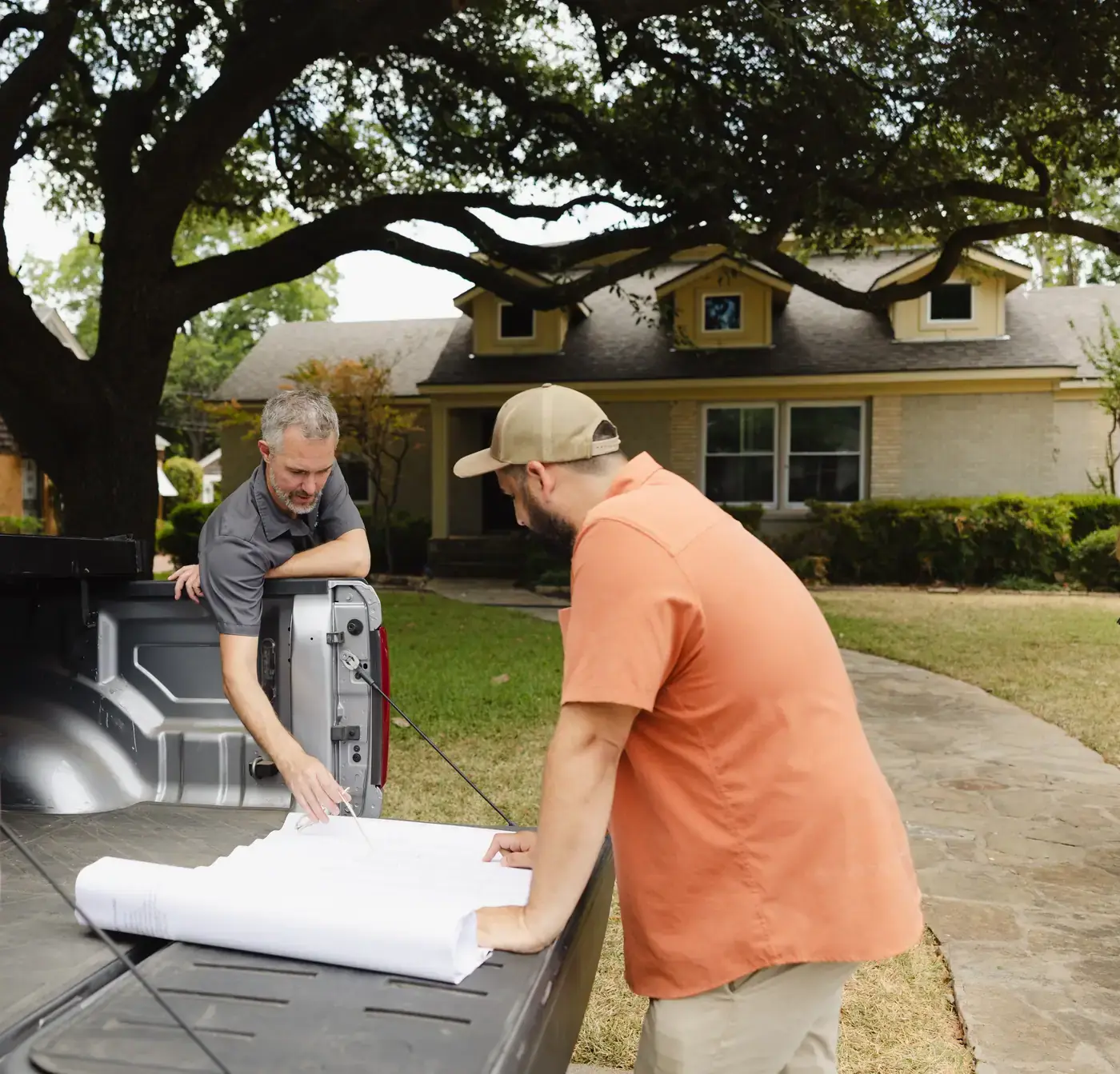
Trees · Fort Worth
Fort Worth tree ordinance
Fort Worth’s tree ordinance doesn’t apply to a single lot under an acre with one house or a duplex on it, unless your lots in that block add up to an acre. It does reach lots over an acre, new subdivisions, and commercial building and clearing, and a tree in the parkway or alley takes the City’s permit on any lot.
Or call or text (817) 631-9803
From the City of Fort Worth Zoning Ordinance §6.302, Urban Forestry, as revised April 22, 2025, and the City’s urban forestry guides, read November 5, 2026.
Who it reaches
Which lots and projects Fort Worth’s tree ordinance covers
The ordinance is written for development: new subdivisions, larger lots, commercial building, clearing and grading. It leaves out the single house lot under an acre.
| Your project | Does it apply? | The City’s rule |
|---|---|---|
| Removing a tree, building or adding on, on one lot under an acre with a house or duplex on it, when your lots in that block total less than an acre | No | Not subject to the urban forestry requirements. §6.302(e)(2) |
| The same work on a lot over an acre | Yes | Keep at least 25% of the existing canopy and reach 40% overall. A permit comes before any tree 6 inches or larger comes out. §6.302(h)(1)d, (j)(1) |
| Side-by-side lots you own that add up to more than an acre | Yes | The City’s exemption only holds when one owner’s lots in the block total less than an acre; ask the City’s urban forestry staff. Urban Forestry Management page; §6.302(d)(5) |
| Splitting more than an acre into lots for houses | Yes | The subdivision needs 40% canopy, kept or planted, or 25% when trees are planted on every lot. §6.302(d)(5), (h)(1)a–b |
| A tree in the parkway, within 10 feet of the street, or in the alley | Park & Recreation | Pruning or removing it takes a permit from the City’s Park & Recreation Forestry section, on any lot. Call Before You Cut |
| A lot in a design overlay district or under a form-based code | Its own rules | Those districts’ standards govern, unless they don’t address trees. §6.302(e)(4) |
If your lot is right at an acre, the ordinance and the City’s guide word the line differently, so ask the City’s urban forestry staff before you cut. The City’s homeowner guide also says to check your HOA’s rules before removing a tree.
Tree removal permits
Do you need a permit to remove a tree in Fort Worth?
On a house lot under an acre, not from the tree ordinance. Where the ordinance does apply, one tree takes a tree removal permit, unless it’s a significant tree. A significant tree, or more than one tree, takes an urban forestry permit. A tree in the parkway or alley takes Park & Recreation’s permit on any lot.
- Tree removal permit
- For one tree that isn’t significant, a dead or declining tree, or a tree on the City’s unprotected list. Email the application and pictures to the City’s urban forestry staff. The City won’t issue one that would leave less than 25% of the lot’s canopy.
- §6.302(j)(1)a; Call Before You Cut
- Urban forestry permit
- For more than one healthy tree, a significant tree, or for building that comes with a building permit. It’s applied for online and comes with an urban forestry plan of the trees on the lot.
- §6.302(j)(1)b–c; Tree Removal Application, reason A, item 5; Call Before You Cut
- Park & Recreation tree permit
- For pruning or removing a tree in the parkway, within 10 feet of a street, or in an alley. The City lists it as free and typically issued within three weeks.
- Call Before You Cut; Park & Recreation Forestry page
A dead or hazardous tree still goes through the application where the ordinance applies. The City asks for pictures and a letter from a certified arborist or other accredited professional explaining why it has to come out.
Protected trees
Which trees Fort Worth protects, and when a tree counts as significant
The ordinance sorts trees into a protected list and an unprotected list. A tree on the protected list becomes significant at 24 inches across, and a post oak or blackjack oak at 18. Where the ordinance applies, a significant tree comes out only by permit.
- 24in
- A protected tree is significant
- about 75 inches around
- 18in
- A post oak or blackjack oak is significant
- about 56½ inches around
Measured across the trunk 4.5 feet above the ground. The ordinance gives the distance around the trunk too, so a tape measure will do.
On the protected list, large trees
American elm, baldcypress, black walnut, bur oak, cedar elm, chinquapin oak, lacebark elm, live oak, pecan, pond cypress, post oak, red oak
Plus 17 medium and 18 small species, crapemyrtle and Texas redbud among them. The full list, in the ordinance
On the unprotected list
ash, Ashe juniper, Bradford pear, chinaberry, Chinese tallow, cottonwood, golden raintree, hackberry, ligustrum, mesquite, mimosa, mulberry, fruiting Osage orange, Siberian elm, silver maple, tree of heaven, willow
and any species on the USDA Forest Service’s invasive list.
When a significant tree has to come out, the City allows four ways to make it up:
- keep one and a half times its canopy elsewhere, on the site or off it
- plant new protected trees with five times its canopy
- pay into the City’s tree fund
- get the Urban Design Commission to approve a plan
Building near a tree
How the City protects a tree you’re building around
Where the ordinance applies, every tree being kept within 50 feet of the work gets a protected root zone: one foot out from the trunk for every inch of the trunk’s diameter.
1 ft per inch
of root zone around a kept tree
- Inside the root zone
- No parked trucks or equipment, no stored materials, no washing out equipment, no permanent fill, and no grade change without a certified arborist’s report the City accepts. (g)(1)d
- Around a significant tree
- A fence of at least four-foot chain link, with support cables and T-posts. (g)(1)a
- After the build
- If a kept tree dies within five years because of the construction, replacing it is the owner’s job. (g)(1)e
When the tree rules would unreasonably burden a development, the City can reduce a required front, rear or side yard by up to half to save the trees. Fort Worth setback requirements
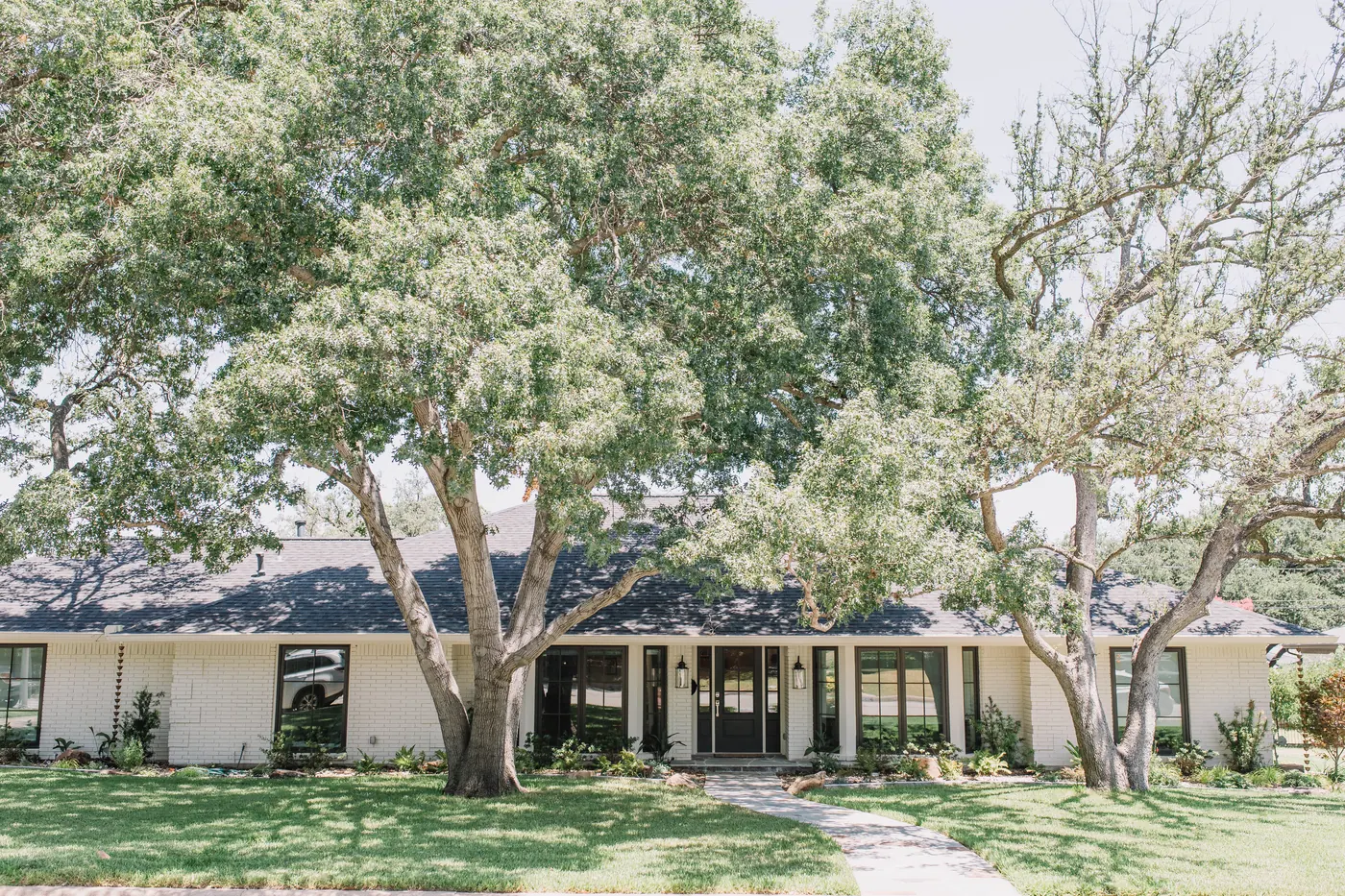
We find out whether the lot fits the house you want and whether the trees can stay. Custom homes in Fort Worth
Before you cut
What to do before you cut down a tree in Fort Worth
Know your lot, know whose tree it is, and ask the office that answers for it. The City’s flyer says it shorter: know before you cut.
-
Know your lot. How big it is, whether there’s a house or duplex on it, and its zoning district. Find your district on the City’s zoning map
-
Know whose tree it is. A tree in the parkway, within 10 feet of the street, or in the alley is the City’s to permit. A tree on your side of the line is usually yours to decide about, and your HOA may have rules of its own.
-
Ask the right office. Park & Recreation Forestry answers for the parkway and the alley. The City’s urban forestry staff answer for everything the ordinance reaches.
When the trees are part of a build, we find out whether they can stay. How the permit process works
Do I need a permit to cut down a tree in my yard in Fort Worth?
Not from the tree ordinance, if your yard is a single lot under an acre with one house or a duplex on it and your lots in that block total less than an acre. The ordinance exempts those lots. A tree in the parkway or alley still needs Park & Recreation’s permit, and your HOA may have its own rules.
Is a live oak protected in Fort Worth?
Live oak is on the ordinance’s protected list, along with pecan, cedar elm, bur oak, post oak and others. Where the ordinance applies, a live oak 24 inches or more across, measured 4.5 feet up the trunk, is a significant tree and comes out only by permit. On an exempt house lot, the ordinance doesn’t reach it.
Can I remove a dead or dangerous tree in Fort Worth?
Yes, with the City’s say-so where the ordinance applies. A dead or declining tree takes only a tree removal permit, and the City asks for pictures and a letter from a certified arborist or other accredited professional. In the parkway or alley, Park & Recreation handles it.
Who decides what happens to the tree between the sidewalk and the street?
That’s the parkway, and the City’s Park & Recreation Forestry section decides what happens to trees there. Pruning or removing one takes its permit, and the City says its forestry section will prune or remove a City-owned tree that poses a high risk to people or property.
What happens if I remove a tree without a permit in Fort Worth?
Where a permit was required, the City can issue a citation of up to $2,000, and each tree counts as its own offense. The City’s flyer also lists civil penalties of up to $1,200 per inch of trunk diameter or $30 per square foot of canopy removed, charged to the owner or the contractor who cut it, and the ordinance holds every permit on the lot until a civil penalty is paid. On a lot zoned for one- or two-family homes, the owner may get an after-the-fact permit at double the fee if the removal would have met the rules. A citation can still be issued. The City won’t give a second after-the-fact permit to the same person, or for the same lot within five years. The City also warns that over-pruning a tree can be charged as removing it.
Does the tree ordinance apply to building a new house?
Not to one new house on a single lot under an acre. It does apply on a lot over an acre and when more than an acre is split into lots for houses, and the City’s exemption only holds when one owner’s lots in the block total less than an acre. Custom homes in Fort Worth
Every rule on this page is quoted or paraphrased from the City of Fort Worth Zoning Ordinance §6.302, Urban Forestry, as revised April 22, 2025, and the City’s Urban Forestry Management page, Homeowner’s Guide to Urban Forestry, Call Before You Cut flyer, Tree Removal Application and Park & Recreation Forestry page, read November 5, 2026.
Your lot
Know which trees can stay before you design
A tree you meant to keep can set where the house goes, and a tree cut without the right permit can cost you more than the tree. Walk your house with a designer and a builder first, and start with an honest estimate. No charge, no obligation.
Or call or text (817) 631-9803