There's a particular kind of magic to a well-designed backyard. The kind that pulls you outside without thinking — coffee in the morning, dinner with friends in the evening, kids running between the grass and the pool while you catch up with a neighbor under the string lights. It doesn't just sit there; it gets used.
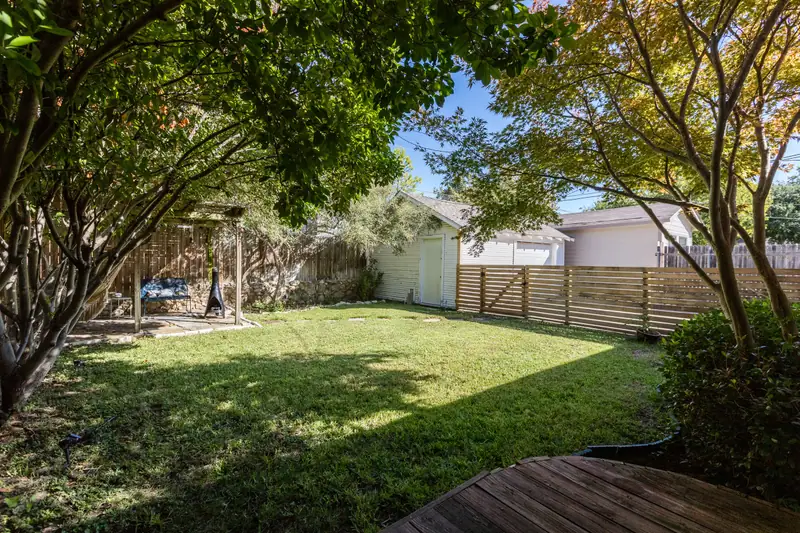
For most DFW homeowners, though, the backyard is the most under-loved square footage on the property. It's where we store the grill, park the dog, and swear we'll "do something about it one day." Meanwhile, our climate practically begs us to live outside for eight months of the year. The weather is too good, and the potential is too big, to leave all that space sitting there half-finished.
At 6th Ave Homes, we've spent years helping people in Fort Worth and the greater DFW area rethink their outdoor spaces — from full pool-and-patio builds to smaller refreshes that simply make a backyard feel more intentional. Along the way, we've seen the same truth play out again and again: a beautiful backyard isn't about spending the most money. It's about making a handful of smart, thoughtful decisions that add up to a space that actually feels like you.
Whether you're ready for a full outdoor overhaul or just want to make this spring's backyard better than last year's, here are ten strategic moves that consistently transform DFW outdoor spaces. Let's dive in.
Start With How You'll Actually Live in the Space
Before you touch a single paver or price out a pool, stop and answer the most important question: how do you actually want to use this space?
This sounds obvious, but it's the step most homeowners skip — and it's the one that causes the biggest regrets later. People end up with a beautiful pool no one uses because there's nowhere to lounge nearby. Or a gorgeous patio that's unusable by 2 p.m. because they forgot about shade. Or an outdoor kitchen facing the neighbor's garage instead of the view.
Spend a weekend observing your backyard like an outsider. Where does the sun hit in the morning? Where does it bake in the afternoon? Where do you naturally gather when friends come over? Where do the kids want to be? What part of the yard do you avoid?
Then write down three to five things you want this space to do — not how it should look, but how it should function. Maybe it's: "host Friday-night dinners for ten," "give me somewhere quiet to work from a laptop in the mornings," "give the kids somewhere to burn energy." Every design decision after that gets measured against those goals.
When you lead with function, beauty follows naturally. When you lead with Pinterest, you usually end up with a backyard that photographs well and lives poorly.
Design the Flow Between Inside and Outside
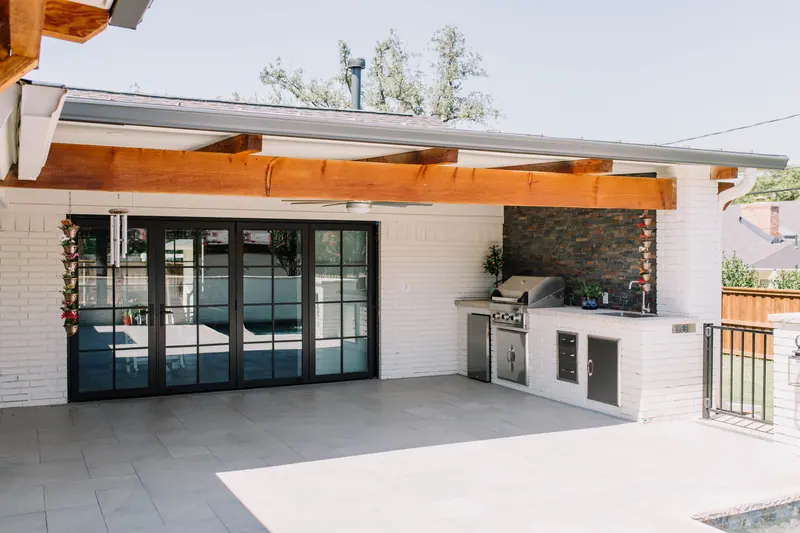
The best outdoor spaces don't feel like a destination you have to commit to walking to — they feel like a natural extension of the house. That seamless flow between inside and outside is one of the single biggest upgrades you can make, and it's often about small architectural moves rather than a massive renovation.
Think about widening your back door to a set of glass sliders or folding doors. Replacing a window with a pass-through bar. Leveling the transition between your interior floor and the patio so there's no step down. Matching — or intentionally contrasting — the flooring from inside to outside so the eye reads it as one continuous space.
Interior materials can also translate outside. Outdoor rugs that echo the living room rug. A light fixture above the outdoor dining table that nods to the one above your kitchen island. Cushions in the same palette as your indoor pillows. These touches trick the brain into reading your backyard as another room of the house rather than a separate zone.
When your outdoor space feels like the next room over instead of outside, you'll use it ten times more. And every time you pull those doors open, your home instantly feels bigger than it did an hour ago.
Rethink What a Pool Can Be
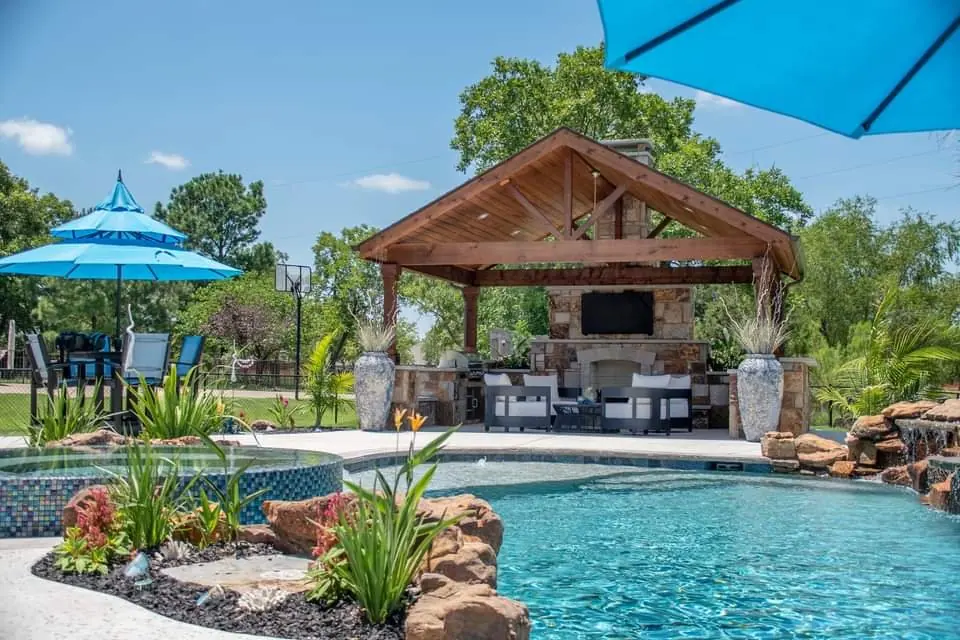
If a pool is in your plans, let go of the generic idea you might have inherited from the '90s — the big kidney-shaped thing surrounded by concrete decking. Today's best residential pools are designed less like standalone features and more like sculptural elements that belong to the landscape.
A smaller, rectangular "plunge" pool can be more beautiful, more affordable, and easier to maintain than a bigger one — while still giving you somewhere to cool off every July. A tanning ledge (a shallow, wide shelf at one end) turns the pool into a place to lounge with a drink, not just swim laps. Dark interior finishes make the water look like a reflecting pond and play better with modern architecture. A spillway into a spa gives you a sculptural water feature and a warm place to sit in November.
And the hardscape around the pool matters as much as the pool itself. Thoughtful decking, soft landscaping edges, and well-placed planters can turn a pool zone from "backyard water feature" into the visual centerpiece of your home.
The right pool is one that matches the scale of your lot, the style of your home, and — again — how you'll actually use it. Not the biggest one your budget allows. Work with a team that designs the pool and the surrounding space together, as one unified project.
Build an Outdoor Living Room
The single most-used zone in any well-designed backyard isn't the pool. It's the outdoor living room — the shaded, soft, comfortable area where you sit down and stay a while.
Real outdoor living rooms have the same DNA as indoor ones. A rug grounds the space. A sofa and a pair of lounge chairs define a seating arrangement. A coffee table anchors the middle. A side table holds your drink. Throw pillows add color and softness. The materials are weatherproof, but the feeling is living room, not patio furniture.
If you have the structure for it, a ceiling fan or two is non-negotiable in Texas. A TV or speakers can turn it into a second den. A fireplace or fire pit gives you a reason to linger after the sun drops. Even small touches — candles, a basket of throws for cool nights, a stack of outdoor books — signal that this is a real room, meant for real use.
Build an outdoor living room that invites people to stay for three hours, not three minutes, and watch how often you find yourself drifting out there with a coffee or a glass of wine. That's the whole point.
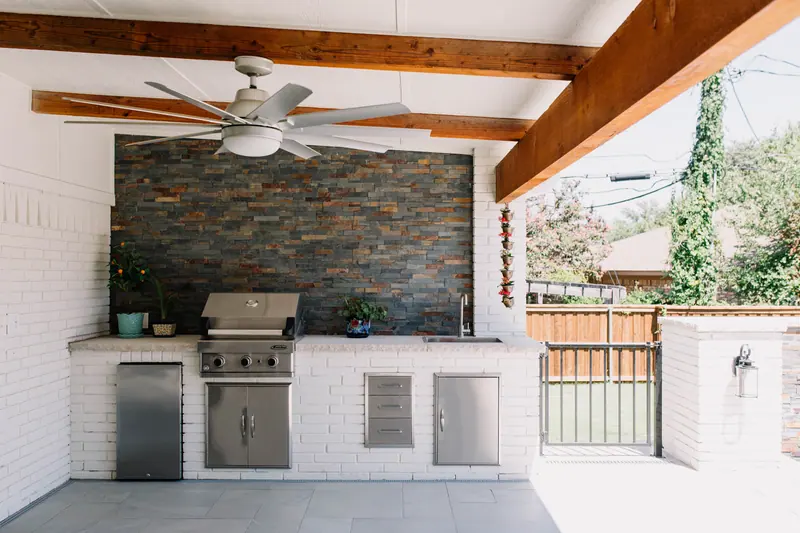
Add a Real Cooking Zone (Not Just a Grill)
A grill sitting alone on the patio is fine. A dedicated outdoor cooking zone is life-changing.
You don't need a full built-in kitchen with stone countertops and a pizza oven — though if that fits the project, go for it. What you need is a thoughtful layout that lets the person cooking stay in the conversation instead of running back and forth to the kitchen for tongs, drinks, ice, or plates.