
Here's a mistake we watch Fort Worth homeowners make all the time. And it costs them — sometimes tens of thousands of dollars.
They start a renovation conversation by calling a few contractors. One of them walks the house for twenty minutes, takes some notes, and hands them a firm price a few days later. Exact. Confident. "Forty-two thousand for the kitchen." Nice round number. Feels professional. Feels decisive.
And it's a relief. Somebody finally gave them a real number they can plan around.
Except that number isn't real. You can't actually price a project you haven't designed yet.
Look at What Wasn't Decided in That Twenty-Minute Walkthrough
Consider the kitchen example. In twenty minutes of eyeballing the space, what does the contractor actually know?
Not the layout. Are you keeping the existing footprint, or moving walls? Is the island bigger, smaller, or completely reconfigured? Is the sink staying where it is, or moving to a new location? Every one of those decisions shifts the plumbing, the electrical, and the cabinetry cost by thousands of dollars.
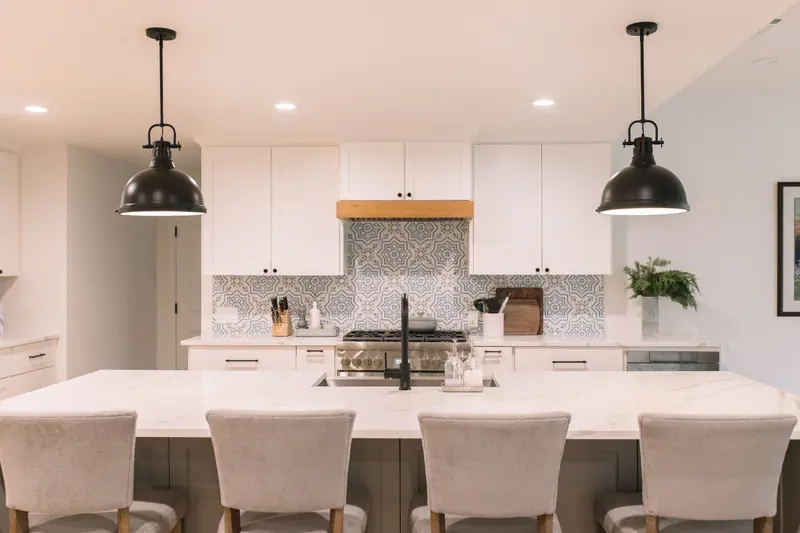
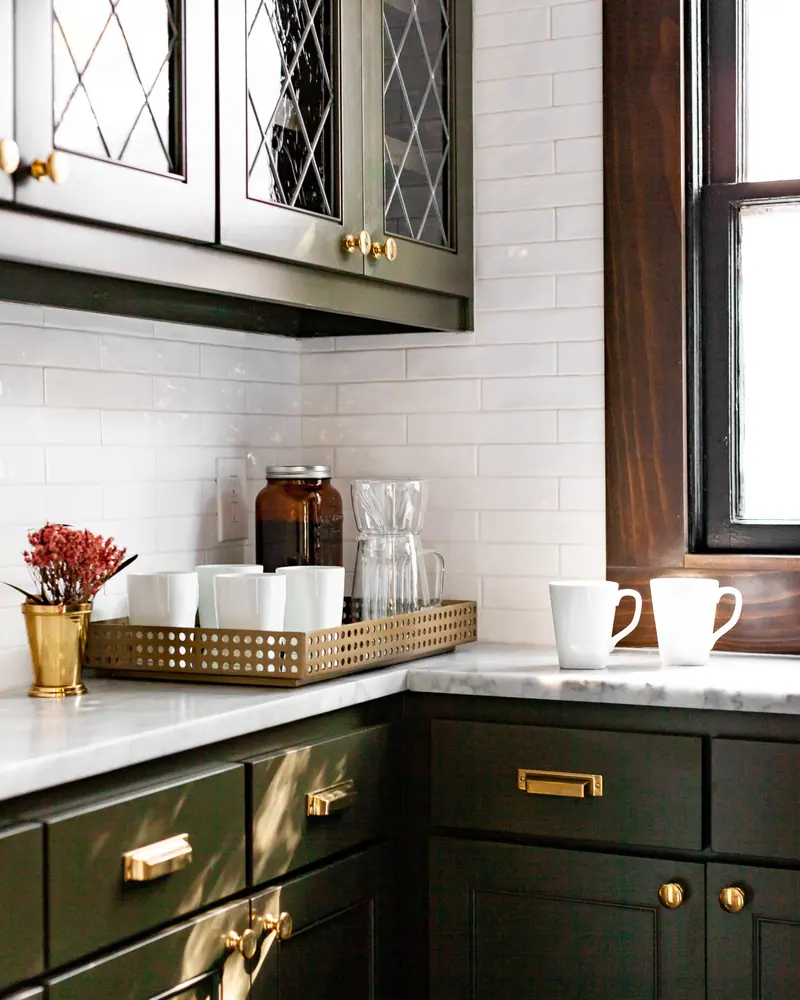
Not the finishes. And finishes alone can swing a project more than almost any other single factor. A kitchen with builder-grade tile and a kitchen with handmade tile are not remotely the same project. A quartz counter and a natural stone counter can be far apart in price on the same slab area, and so can two sets of cabinets for the same footprint. Appliances, hardware, lighting fixtures, faucets: every category depends on what you actually pick. Here's what a Fort Worth kitchen remodel costs with us, and what moves the price.
Multiply that variability across every room and every category, and "forty-two thousand" was never a number. It was a guess in a nice suit.
What Happens Next Is Predictable
One of two things happens with a bid-before-design contractor.
Scenario A: He honors the number and quietly starts cutting corners to survive it. He specs the cheapest tile that's technically what you asked for. He substitutes builder-grade hardware for the pulls you actually picked. He uses the shortest-lead-time cabinet grade because he can't afford to wait on the good stuff. He installs the fixtures with less careful workmanship because the labor budget is squeezed. You end up with a project that costs $42,000 and looks like a $42,000 project — meaning, not what you wanted.
Scenario B: Change orders start hitting you the second reality shows up. The tile you actually wanted costs thousands more than the placeholder. The layout you agreed to on paper requires plumbing changes the walkthrough didn't catch. The electrical panel needs an upgrade to handle the new appliances. Each change order comes with its own confident number, and each one adds to a running total that quickly blows past the $42,000 you thought you were locked into.
Either way, the confident number is gone. You either got a project you didn't want at the price you were promised, or you got the project you wanted at a price you never agreed to.
A contractor who bids before there's a design isn't being decisive. He's shooting himself in the foot — and you're the one who limps.
How We Actually Do It at 6th Ave Homes
The right process takes longer and costs more time up front. It also delivers a number you can actually plan your life around. Here's the sequence we use on every project.
Step 1: The honest estimate. During our initial consultation, we walk your house, listen to what you want to do, and give you a real, honest ballpark up front. Not a guess dressed up as a bid — an estimate range that reflects the scope you're describing. This is the number that helps you decide whether the project is even in the right zip code for your budget, before you invest any more time.
Step 2: The design phase. Actual plans. Real floor plans, real elevations, real material specifications, real fixture selections. This is where the project stops being an idea and becomes a specific, buildable thing. Depending on scope, this phase runs anywhere from a few weeks to a few months.
Step 3: The detailed, itemized bid. Once we know exactly what we're building, we put together a line-by-line, itemized bid. Every cabinet, every tile, every fixture, every trade allocation. We work hard to make it accurate — not because it's fun paperwork, but because that's the number you'll plan your life around.