
Drainage · Fort Worth
Fort Worth drainage and grading rules
One house or a duplex in Fort Worth that disturbs less than an acre, outside a larger development, takes no grading permit, just a grading pattern named with the building permit: front, rear, or both. Water running from a neighbor’s lot onto yours is a civil matter the City doesn’t regulate.
Or call or text (817) 631-9803
From the City of Fort Worth Code, Chapter 12.5, Article X, Grading Permit, in force since July 15, 2024, and the City’s stormwater pages and Stormwater Criteria Manual, read November 6, 2026.
Lot drainage
What Fort Worth asks about lot drainage, project by project
For one house or a duplex on less than an acre, the City’s drainage question comes with the building permit: you name one of three grading patterns. A grading permit, with an engineer’s plans, is for an acre or more of disturbed ground, or for land that’s part of a larger development.
| Your project | What the City asks for | The City’s rule |
|---|---|---|
| A new house or duplex that disturbs less than an acre, on a lot that isn’t part of a larger development | A grading pattern | Name one of three patterns when you apply for the building permit, and affirm it matches any approved grading plan for the subdivision. No grading permit, and no fee for the review. §12.5-876, §12.5-877(b)(1), §12.5-882(b) |
| A lot that can’t follow one of the three patterns, or the subdivision’s grading plan | A City review | The City’s Transportation and Public Works Department reviews the lot grading before it approves the building permit. §12.5-876(c) |
| Work that disturbs an acre or more | A grading permit | Grading and drainage plans by a professional engineer, an approved drainage study and a stormwater pollution prevention plan, then a grading certificate before the certificate of occupancy. §12.5-877(a), §12.5-878, §12.5-881 |
| A lot under an acre that may be part of a larger development | Ask the City | The no-permit rule for a house doesn’t hold inside a common plan of development. The City’s manual counts land on a single plat, land one developer owns or manages, and land under a common HOA, among other tests. Ask the City whether yours is one. §12.5-877(a), (b)(1); Stormwater Criteria Manual §1.3 |
| Building in the FEMA floodplain | A floodplain permit | A Floodplain Development Permit comes before any construction or physical change to the property there. Stormwater Criteria Manual §2.4.3 |
| Building that disturbs less than an acre in a City Flood Risk Area | Elevation and an engineer’s certificate | The building sits two feet above the 100-year flood elevation, and an engineer certifies the work won’t raise the flood risk next door. In force since July 15, 2024. Stormwater Review page |
| A wall or building in a public drainage easement | Stormwater approval | No structures, retaining walls included, without the City’s stormwater approval. Stormwater Review page |
Not sure which row is yours? Ask the City before you design: Stormwater Development Services, at SDS@fortworthtexas.gov.
Grading permits
Do you need a grading permit in Fort Worth?
Not for one house or a duplex that disturbs less than an acre and isn’t part of a larger development. You name a grading pattern with the building permit application instead. A grading permit starts at an acre of disturbed ground, or less inside a larger development.
-
Type A
all drainage to the front
-
Type B
drainage to the front and rear
-
Type C
all drainage to the rear
The code names the patterns after HUD, the U.S. Department of Housing and Urban Development. You also affirm that your pattern matches any approved grading plan for the subdivision. If the lot can’t follow one of the three, the City reviews its grading before it approves the building permit. The code charges no fee for reviewing a house’s grading pattern.
The acre counts all the ground the work disturbs, not just the house: the City’s definition includes clearing, grading, digging, demolition and stockpiling dirt. What goes in a permit set
Your yard and the next one
Who fixes water draining from a neighbor’s yard in Fort Worth?
Usually, the two of you. The City treats water running from one private lot onto the next as a civil matter it doesn’t regulate, and it says it can’t require a property owner to fix private drainage.
- What the City can do
- Send someone for an on-site visit, try to set up a talk with your neighbor, and point you to ways to cut your flood risk. Call Stormwater Customer Service at 817-392-6261.
- What you can do on your lot
- The City encourages you to control runoff on your own lot, as long as it doesn’t hurt your neighbors: grading, grasses and plants, rock and stone, and possibly wood or concrete retaining walls. For the fix itself, it points you to an engineer or a landscape professional.
- Where the City steps in
- The City maintains drainage only on public property, such as streets, alleys and rights-of-way, and in dedicated easements.
- A job site next door
- Flooding from a development under construction goes to Stormwater Customer Service, 817-392-6261. Dirt or materials washing into the storm drain go to the City’s Code Compliance department, on the MyFW app or at 817-392-1234.
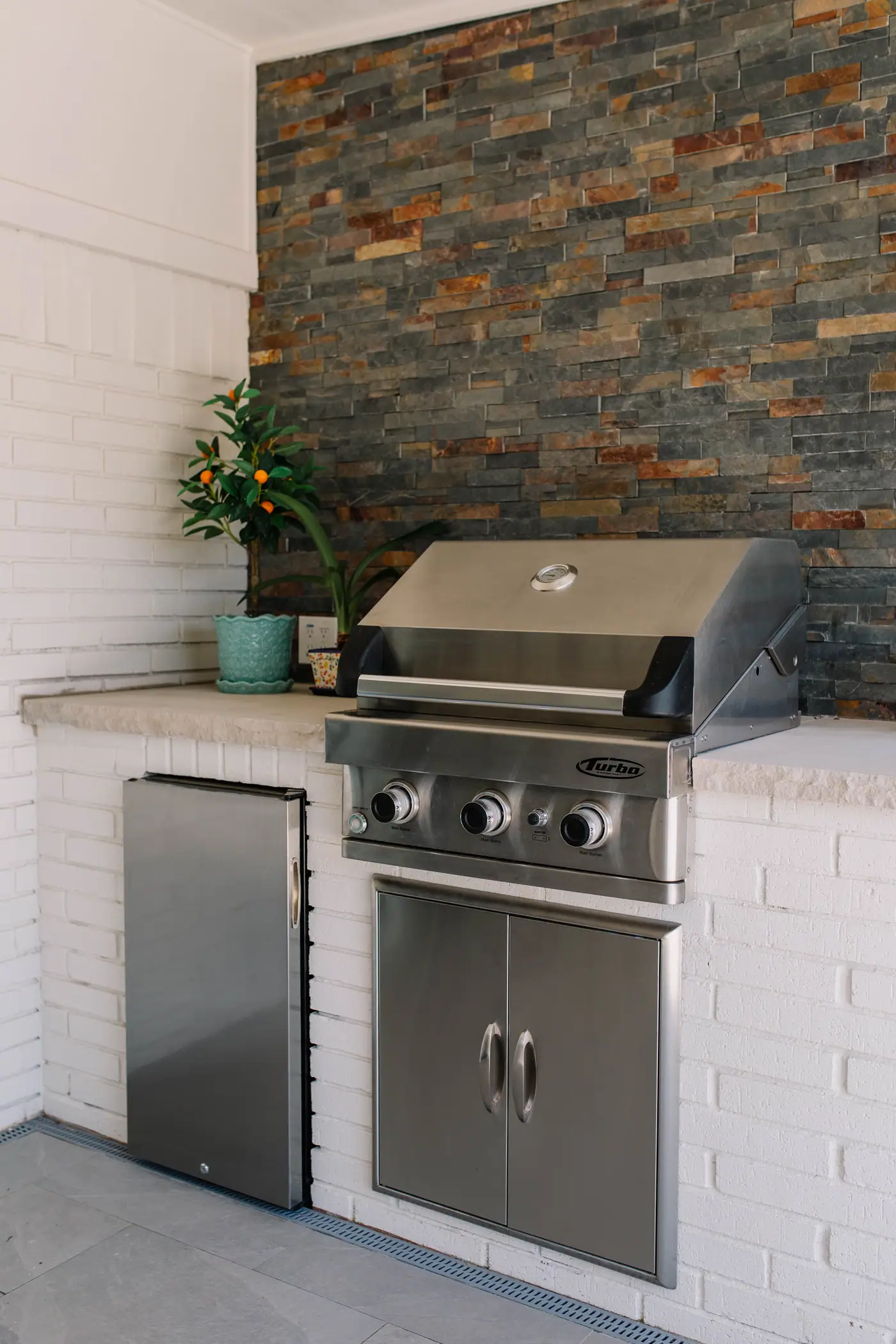
On a backyard we design, we start in the yard, because grade and drainage can rule out a plan. Pools and outdoor living
Flood risk
How to check if your Fort Worth lot is in a flood risk area
Look it up before you design. The City’s maps show three kinds of flood risk, and two of them come with rules for building.
2 ft
above the 100-year flood elevation, for building that disturbs less than an acre in a City Flood Risk Area
the City’s rule since July 15, 2024
- FEMA floodplain
- Mapped by FEMA. Building there takes the City’s Floodplain Development Permit first.
- City Flood Risk Area
- Mapped and regulated by the City, not FEMA, where its studies show runoff collecting. Building there that disturbs less than an acre sits two feet above the 100-year flood elevation, with an engineer’s certificate.
- Potential High Water Area
- Advisory. Places where runoff can collect six inches deep or more. Worth knowing before you set a floor.
The City’s Flood Risk Viewer shows all three. Its One Address lookup shows the City Flood Risk Areas and Potential High Water Areas. Only about 3% of the city has been studied closely enough to map as a City Flood Risk Area, and the City calls its maps a starting point for the flood risk at a specific address. Open the City’s Flood Risk Viewer · Look up your address on One Address
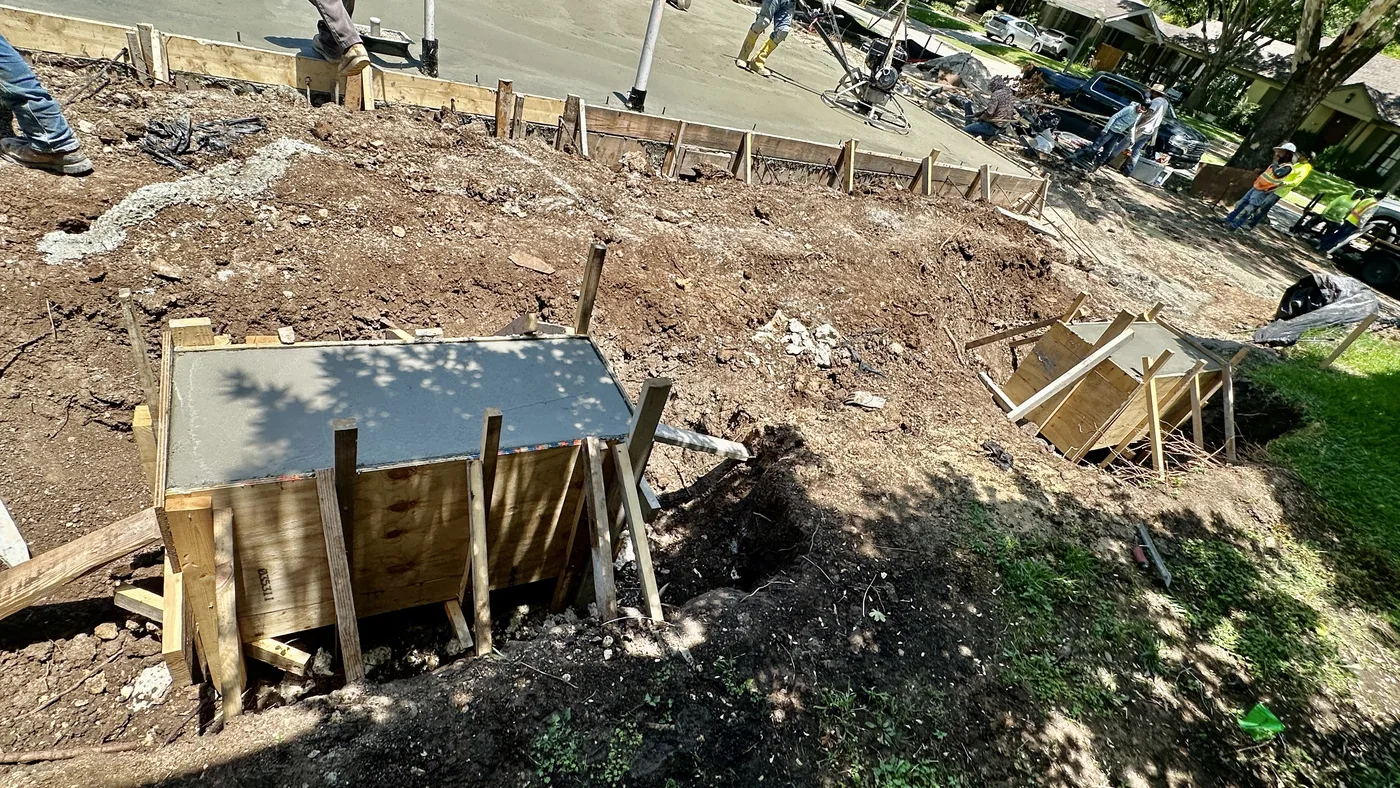
Before you build
What to check about drainage before you build in Fort Worth
Count the ground you’ll disturb, look up your lot, and know which way it drains before the plans are drawn.
-
Count the ground. The acre the City counts includes clearing, digging, demolition and dirt stockpiled on site, not just the house. Building on clay soil in Fort Worth
-
Look up your lot. Its flood risk on the City’s Flood Risk Viewer, and whether the subdivision has an approved grading plan your pattern has to match. The street side has its own permit: a new house needs a driveway approach and a sidewalk.
-
Know which way it drains. To the front, to the rear, or both. If it can’t be one of the three, plan on the City’s review before the permit.
- Stormwater Development Services
- SDS@fortworthtexas.gov
On a new house, our drafting team draws it, and we price it, permit it and build it. How the permit process works
Do I need a grading permit to build a house in Fort Worth?
Not if the house or duplex disturbs less than an acre and the lot isn’t part of a larger development, which the City calls a common plan of development. You name a grading pattern with the building permit application instead. For an addition, ask the City at the permit whether it wants a pattern: the code writes the rule for a single-family or duplex building permit, and the City’s pages describe it for new homes.
What are HUD Type A, B and C lot grading?
They’re the three grading patterns Fort Worth’s code names. Type A drains all of the lot to the front, Type B drains to the front and the rear, and Type C drains all of it to the rear. You pick one with the building permit application for a new house or duplex.
Can my neighbor’s yard drain into mine in Fort Worth?
The City doesn’t regulate it. Water running from one private lot to the next is a civil matter in Fort Worth, and the City says it can’t require a property owner to fix private drainage. Its Stormwater Customer Service, at 817-392-6261, can visit, try to help you and your neighbor talk it through, and suggest ways to cut your flood risk.
Can I regrade my yard or build a retaining wall to stop water in Fort Worth?
On your own lot, the City encourages measures to control runoff, as long as they don’t hurt your neighbors: grading, plants, rock and stone, and possibly wood or concrete retaining walls. Keep any wall out of a public drainage easement unless the City’s stormwater staff approve it. The City points you to an engineer or a landscape professional for the fix.
Do I need a floodplain permit to build in Fort Worth?
In the FEMA floodplain, yes: a Floodplain Development Permit comes before any construction or physical change to the property. In a City Flood Risk Area, building that disturbs less than an acre has to sit two feet above the 100-year flood elevation, with an engineer’s certificate that it won’t raise the flood risk next door. The City’s Flood Risk Viewer shows both.
What happens if you grade without a permit in Fort Worth?
Where the City required a grading permit, grading without one is an offense, and so is grading that doesn’t follow the approved plans or permit. Each is a Class C misdemeanor with a fine of up to $2,000, and each day it continues counts as its own offense.
Every rule on this page is quoted or paraphrased from the City of Fort Worth Code, Chapter 12.5, Article X, Grading Permit (§12.5-874 to §12.5-883, in force since July 15, 2024), the City’s Grading Permit Process page, Stormwater Criteria Manual (July 2024), Stormwater Review page and Drainage Runoff FAQ, read November 6, 2026.
Your lot
Know where the water goes before you design
Grade and drainage can rule out a plan, and a lot that can’t follow one of the City’s three patterns waits on a City review before the permit. Walk your house with a designer and a builder first, and start with an honest estimate. No charge, no obligation.
Or call or text (817) 631-9803