
CLICK HERE to see our FREE guides on renovation, interior design, and construction
6th Avenue Homes
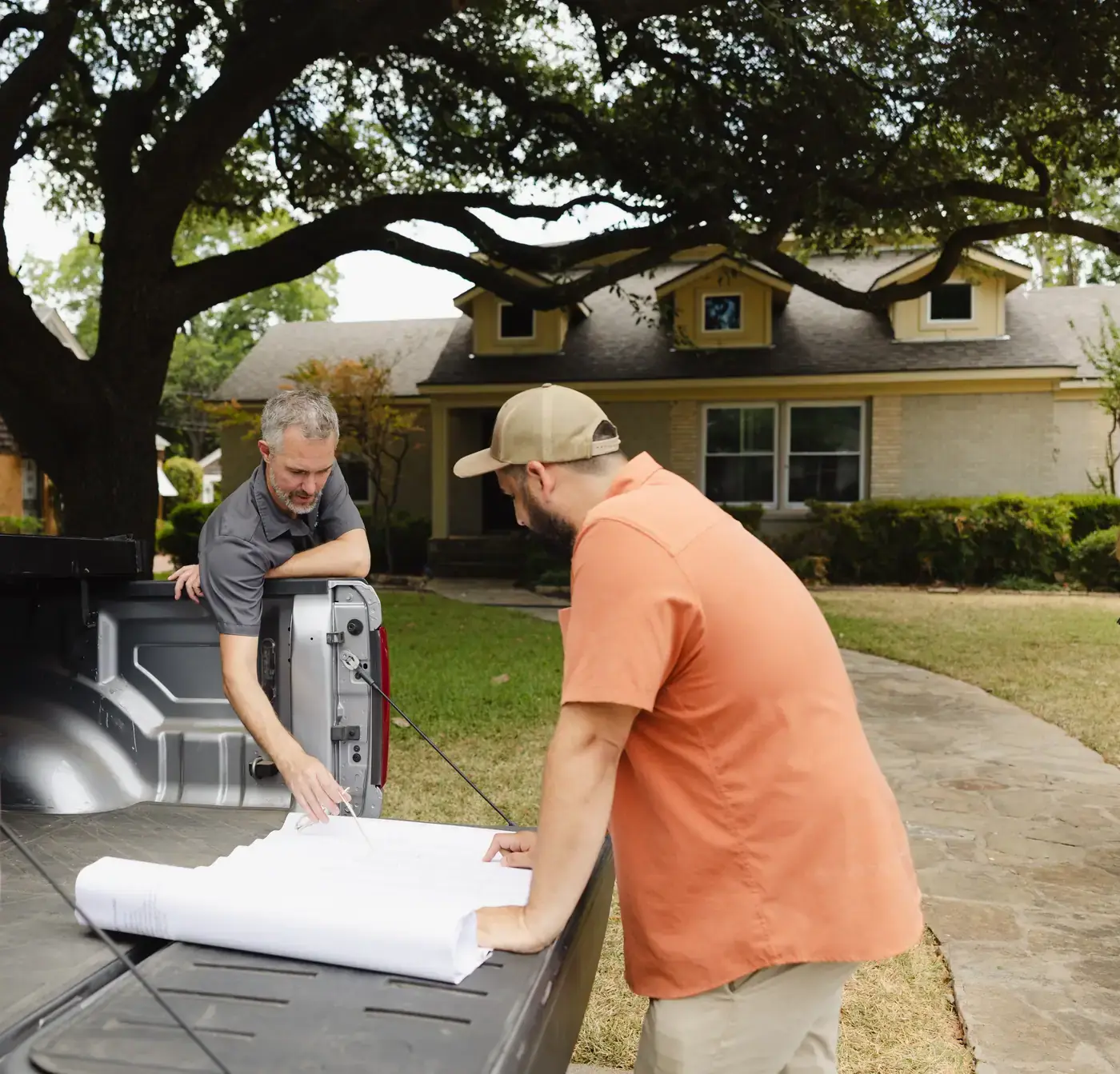
Two of our team reading a plan set on a pickup tailgate in a front yard, under the limbs of a live oak.

Your lot · Fort Worth

Fort Worth replat requirements

In Fort Worth, a replat redraws the lots on a recorded plat. If it creates more lots zoned single-family or two-family, the City holds a public hearing on it.

Or call or text (817) 631-9803

From the City of Fort Worth’s Platting Information page, its replat and minor plat checklist, its platting fee schedule, its standard plat notes and its new-house permit checklist, read November 7, 2026.

The plat

Do you need to replat your lot in Fort Worth?

It depends on what you’re changing. The City says the plats a project needs “depend on the project itself and the stage of development.” Here are the three changes owners ask about most, drawn the way the City asks a replat to be drawn.

Gray lines are the lots on record. Solid lines are the lots you’re asking for.

One lot on a street drawn in plan, a new solid line down its middle making two lots, the lot on record drawn in gray around them. STREET

One lot split into two

The City’s plat
A replat, when the lot is already on a recorded plat
Public hearing
When the new lot is zoned single-family or two-family, yes. The City holds a public hearing when a replat creates more lots zoned that way.
City fee
$591 with a public hearing, $503 without, plus $29.53 for each single-family lot

Two lots on a street drawn in plan in gray, the line between them on record, with one solid outline around both as one lot. STREET

Two lots joined into one

The City’s plat
A replat, or for some changes an amending plat. The City’s platting team can tell you which.
Public hearing
Maybe not. The City says a replat that creates no more single-family or two-family zoned lots, with only minor street adjustments, may be approved administratively.
City fee
$503 without a public hearing, $591 with one, plus $29.53 for each single-family lot
One tract of land on a street drawn in gray, cut by solid lines into three lots that each face the street. STREET

Land never platted, cut into lots

The City’s plat
A minor plat, for four lots or fewer
Public hearing
No. Every lot has to front an existing public street and meet its zoning district’s lot size.
City fee
$503, plus $29.53 for each single-family lot

Two other plats change a recorded plat without a hearing. The City says an amending plat or a correction plat goes through “without public notice, a public hearing, or approval of other lot owners,” for purposes Texas law lists in section 212.016. An amending plat is filed with the county once the Plan Commission’s Executive Secretary approves it. The City’s platting team can tell you which plat your change takes.

Fees from the City’s platting fee schedule as of October 1, 2026. Each revision after the first is $260, a correction plat is $59.06, and the City adds a $16.87 technology fee. The county’s filing fees are extra.

Splitting a lot to build? Get the new house priced while the plat is in review.

Before you build

Why your plat matters before you build in Fort Worth

The permit for a new house or an addition starts with your plat. Item 1 on the City’s checklist is a copy of your lot’s legally registered and recorded plat, from the Tarrant County courthouse.

The City defines it this way:

“A plat is a map of a piece of land identifying the location and boundaries of street rights of way, individual lots or parcels and other site information.”

It shows your lot lines, utility easements and setback lines, and it’s recorded with the county.

Item 1

on the City’s checklist for a new house or an addition: your recorded plat

A recorded plat carries the approval stamps of the City’s platting section, its Plan Commission, its Fire Department and Tarrant County. Without them, the City says, a plat “has not been recorded and not accepted for permit submittal.”

Tearing down to build new? The new house’s permit asks for the plat too.

What a Fort Worth demolition permit takes
The word plat, defined

Building on the lot once the plat is set? Walk it with us first.

The checklist

What Fort Worth asks for with a replat

A plat drawn by a surveyor, an application every owner signs, and studies the City has accepted before you file. These come from the City’s replat and minor plat checklist.

Signatures
Every record owner of land inside the plat signs the application, or signs a letter of authorization for an agent.
Studies first
Any water and sewer, traffic or drainage study the City requires is accepted before the application goes in.
The drawing
A plat with the surveyor’s seal, or the surveyor’s signature and notary block, showing the lots you’re asking for in solid lines and the lots on record grayed out. It states “The purpose of this replat is…”
No leftover pieces
A replat can’t create a remainder or a partial lot [SO, Sec. 31-41 (a)].
Access
Every lot needs direct paved access to a public or private street [SO, Sec. 31-81 (a) (1)].
Zoning
The City says a plat that conflicts with its zoning can’t be processed. A zoning change or a variance comes first.
Narrow lots
A new lot under 50 feet wide should take its driveway from the abutting rear alley [SO, Sec 31-106 (13)].

The City of Fort Worth’s Application for Subdivision Plat Approval and its Replat / Minor Plat Checklist, form dated

February 2023,

read November 7, 2026.

SO is the City’s Subdivision Ordinance. Section numbers are as the checklist prints them.

What your zoning district allows on each lot: Fort Worth setback requirements

Not sure of your district? Find your zoning in Fort Worth

Want the house drawn to fit the new lot? We price it from the plans.

How long it takes

30 days

for the City’s decision, once your application counts as filed

How long a replat takes in Fort Worth

The City’s checklist says a decision must be made within 30 days of submittal, once the application counts as filed. A replat that creates more single-family or two-family zoned lots also goes to a public hearing.

The public hearing

A replat that creates more single-family or two-family zoned lots goes to the City Plan Commission, the citizens City Council appoints to approve and deny plats. Since September 1, 2025, the public takes part in its meetings in person only.

The review clock

The City’s first review of a plat application takes 21 calendar days or less, and 7 or less for each round of corrections. The clock waits on you: the City doesn’t count an application as filed until the fees are paid, zoning and the Subdivision Ordinance are satisfied, and every required document has been accepted.

Waiting on a hearing date? Use the time to plan the house.

Before you file

How to start a replat in Fort Worth

Find your plat, talk to the City’s platting team, and file online.

Three of our team talking and laughing in the framed hallway of a new house, the studs and joists still open.
  1. Find your plat. Look up your address on the City’s OneAddress for the subdivision name. Tarrant County has plats online from 1970 on, and the City’s plat directory has them from 2007.

  2. Call the platting team. At 817-392-8027, before a surveyor draws anything. They can tell you which plat your change takes and which studies the City will want.

  3. File online. Upload the application, a letter of authorization if someone files for you, and the plat to the City’s Accela portal. Once it’s approved, it’s filed with the county.

Once the lot is set and you’re ready for the house, our drafting team draws it, and we price it, permit it and build it.

How the permit process works

Planning the house for the new lot? Start with the walk-through.

Questions

Fort Worth replat questions

Planning a new house on the new lot? Bring us the address.

Do I need to replat my lot in Fort Worth?

It depends on the change, and the City’s platting team is the one to ask. Its Platting Information page says a replat that creates more single-family or two-family zoned lots goes to a public hearing, one that creates none may be approved administratively, and a minor plat is permitted for four lots or fewer that have never been platted and recorded. Call the platting team at 817-392-8027 with your address.

What’s the difference between a replat and an amending plat in Fort Worth?

A replat redraws lots on a recorded plat, and the City holds a public hearing when it creates more single-family or two-family zoned lots. An amending plat goes through “without public notice, a public hearing, or approval of other lot owners,” for the purposes Texas law lists in section 212.016, and the Plan Commission’s Executive Secretary approves it.

Does a replat need a public hearing in Fort Worth?

When it creates more single-family or two-family zoned lots, or significantly changes interior streets, yes. The City says a replat that creates no more single-family or two-family zoned lots, with only minor street adjustments, may be approved administratively.

How much does a replat cost in Fort Worth?

On the City’s fee schedule as of October 1, 2026, a replat with a public hearing is $591 and one without is $503, each plus $29.53 for each single-family lot. Each revision after the first is $260, the City adds a $16.87 technology fee, and the county’s filing fees are extra. The surveyor’s fee is separate.

How long does a replat take in Fort Worth?

The City’s first review takes 21 calendar days or less, and 7 or less for each round of corrections. Its checklist says a decision must be made within 30 days of submittal, once the application counts as filed: fees paid, zoning and the Subdivision Ordinance satisfied, and every required document accepted.

Who draws a replat in Fort Worth?

A surveyor. The City’s checklist asks for the surveyor’s seal, or the surveyor’s signature and notary block. Every owner of land inside the plat signs the application, and a letter of authorization, when one is used, is signed by every record owner and the engineer or surveyor of record.

Does a replat remove deed restrictions in Fort Worth?

No. The City’s standard plat note for a replat says it “does not vacate the previous ‘Plat of Record’ governing the remainder of the subdivision, nor does it amend or remove any deed covenants or restrictions.”

Every rule on this page is quoted or paraphrased from the City of Fort Worth’s Platting Information page, its Replat / Minor Plat Checklist (February 2023), its platting fee schedule as of October 1, 2026, its standard plat notes and its Submittal Requirements for New Residences and Additions, read November 7, 2026.

Your lot

Plan the house with the lot

Build on your lot, on land you are still looking at, or on a teardown in a neighborhood you already love. Walk the lot with a designer and a builder first, and start with an honest estimate. No charge, no obligation.

Custom homes in Fort Worth

Start your project