Drought, Watering Restrictions, and the Outdoor Living Build That Actually Works This Summer in Fort Worth
· 4 min read
Late June in Fort Worth: the lawns are going yellow and sprinklers run only on assigned days. There's a better place to put the money than a thirsty lawn — a real patio, real shade, a place to cook and sit. Here's what a drought-aware outdoor living build includes, what it costs, and what we steer clients away from.
It's late June in Fort Worth and the lawns are starting to go yellow. Sprinklers run only on assigned days, the heat isn't letting up, and a lot of homeowners are spending July fighting a lawn they barely use. There's another way to spend that money. Put it into the parts of the backyard that don't need water at all: a patio, shade, a place to cook and sit. Then let the lawn get smaller.
This is the construction side of that conversation: what a drought-aware outdoor living space is made of, what it costs, and why it ends up being the backyard people live in.
The Water Reality in Fort Worth Right Now
Fort Worth limits sprinkler watering to two assigned days a week, year-round, and the Tarrant Regional Water District's drought plan tightens those limits in stages when lake levels drop. In a hot, dry summer that can mean fewer watering days right when the grass needs the most.
For anyone trying to keep a big St. Augustine or Bermuda lawn looking perfect, that's a losing fight. The lawn yellows anyway, the water bill climbs, and the yard still isn't a place anyone wants to be at 4 in the afternoon.
The better question isn't how to keep the grass alive. It's what you want to do back there, and what you can build that holds up in this climate.
What a Drought-Aware Outdoor Living Build Includes
A drought-aware backyard puts the construction budget into things that need no water and get used every week. These are the pieces we design and build.
Hardscape as the anchor. A well-built patio in stone, brick, or concrete pavers, sized for how you'll actually use it, matched to the architecture of the house. It doesn't need water, it doesn't need mowing, and it covers ground that would otherwise be thirsty lawn.
Real shade. A covered patio off the back of the house, a freestanding pavilion, or a pergola where filtered sun is enough. In a Texas summer, shade matters more than green space. A good covered structure turns a backyard nobody uses from noon to sundown into the room everyone ends up in.
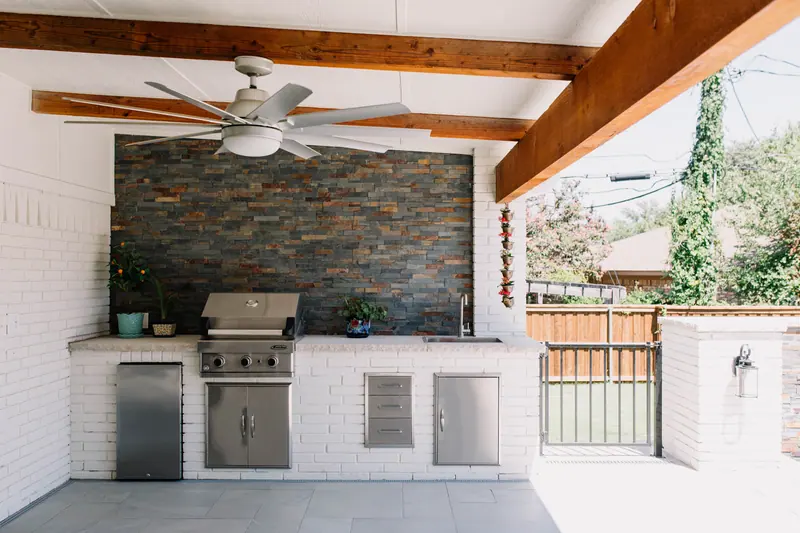
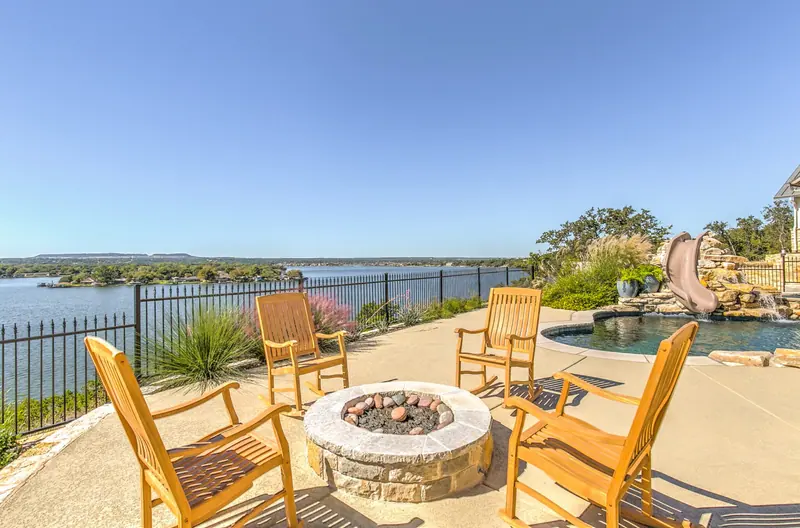
Outdoor kitchens and fire features. Built-in grills, outdoor sinks, and gas fire pits or fireplaces. They give the patio a reason to exist and stretch the hours you spend outside into spring and fall evenings.
One plan for the whole space. The patio, the cover, the kitchen and the fire feature get designed together, along with where the lawn stops.
In a Texas summer, shade matters more than green space.
The Cost and Value Math
Pool and outdoor living builds in Fort Worth run about $35,000 to $400,000, and they usually take three to seven months. A covered patio or an outdoor kitchen sits at the low end; a pool with a full outdoor kitchen sits at the top. We bill cost-plus, so you see the real cost of materials and labor and our markup on top, and the real number comes from walking your yard.
The value side is simpler than it sounds. Every square foot of patio and covered space is a square foot you don't water or mow, and it's the part of the yard you'll use. When it comes time to sell, a backyard that reads as a finished outdoor room shows better than a big, tired lawn.
What It Looks Like Built
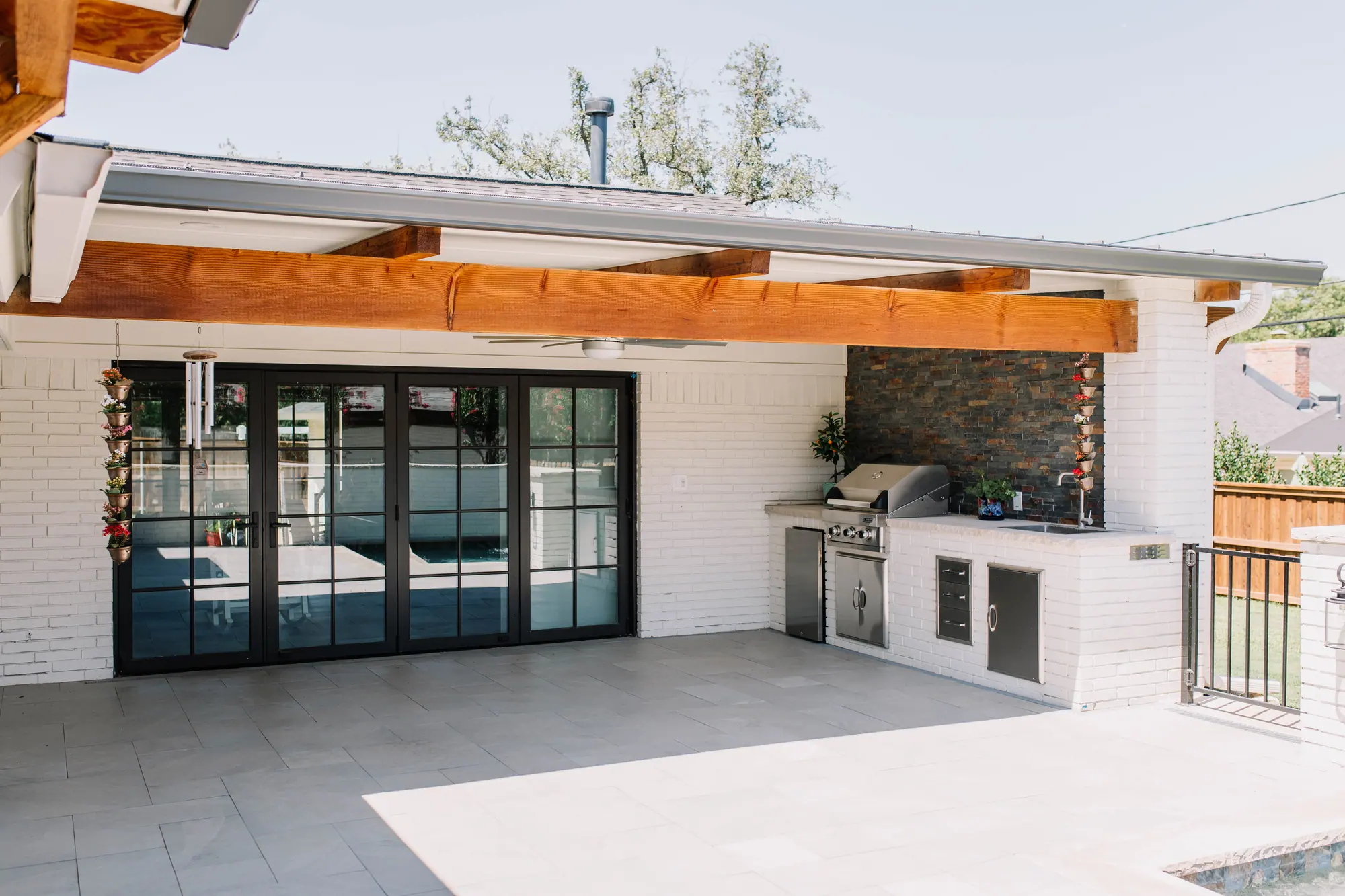
One we built in Overton Park: a house we took down to the studs for clients who had lived there 30 years, and then gave them the outdoor space they'd wanted. A cedar beam carries the cover off the eave of the white-brick house, folding glass doors open onto the patio, and the grill, the fridge and the sink sit under the same roof, with a ceiling fan overhead. We drew the plans, designed it and built it as one project. See the Overton Park project.
What We Steer Clients Away From
Synthetic turf as the default answer. It looks fine at first, but it gets hot enough in a Texas summer to be uncomfortable for kids and dogs. It isn't a substitute for shade.
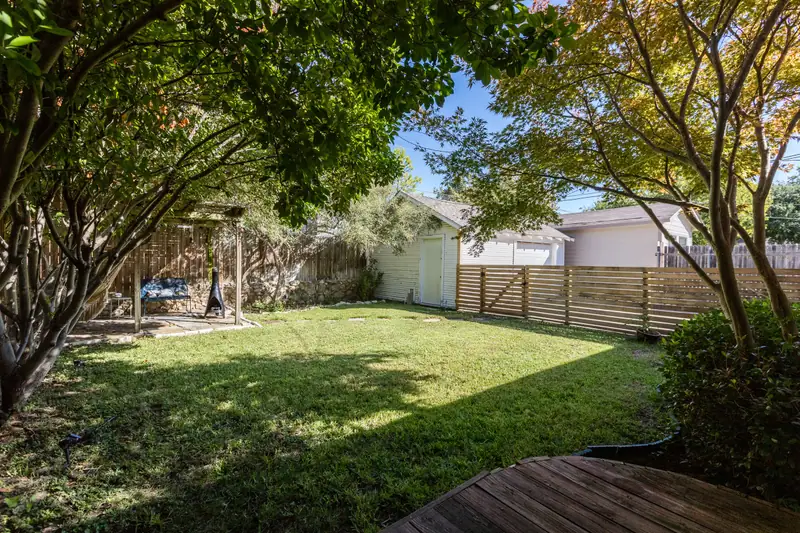
Big lawns nobody walks on. Thousands of square feet of grass that only gets mowed is water, time and weekends spent on space you don't use. Shrink it and put the money where you'll sit.
Buying the backyard one piece at a time. A patio this year, a pergola that doesn't line up with it next year, a grill island that blocks the view. Design it once, then build it in the order that makes sense.
How to Start the Conversation
If your backyard isn't working this summer, with the water bill up, the lawn yellow anyway and the heat keeping everyone inside, let's walk it together. We'll talk through how you want to use the space and design one plan for the patio, the shade and the rest, built to work with this climate instead of against it.
Our pool and outdoor work is in Fort Worth. See our pool and outdoor builds, then schedule a meetup and we'll start with your yard.