The Post-July 4 Backyard Audit: What This Weekend's Party Just Told You About Your Fort Worth Backyard (and What to Build Before Next Summer)
· 5 min read
The July 4 party is the hardest test your Fort Worth backyard runs all year, and whatever didn't work is easiest to see the week after. Here are ten questions to ask, from shade and seating to lighting and grass, and why now is the time to plan the fix for next summer.
Sometime in the week after July 4, before the folding chairs go back in the garage, take fifteen minutes and walk your backyard with honest eyes. Ask one question: what worked this weekend, and what didn't?
The July 4 party is the hardest test your backyard runs all year. More people than usual, more hours outside than usual, more cooking, more kids, more bugs. Whatever doesn't work is easier to see on July 5 than on any other day. And you have roughly a year before the next one, which is enough time to design and build the fix.
Here are the ten questions we'd ask. Grab a cold drink and something to write on. Your answers are the start of a plan.
Question 1: Was There Enough Shade?
Start here. You wanted to be outside, but the sun sat on the patio all afternoon and nobody stayed out there until it dropped behind the fence. The kids went inside. The adults crowded under the one tree.
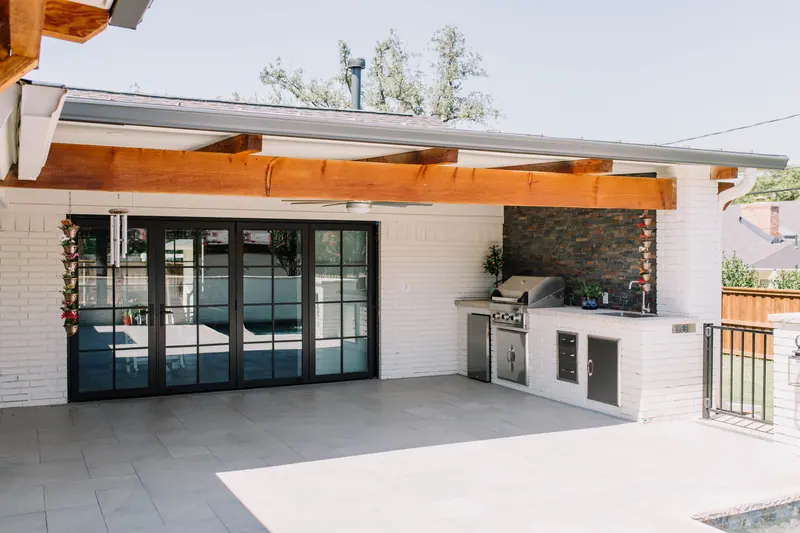
What to build: real, permanent shade. A covered patio off the house or a freestanding pavilion, with a solid roof. In a Fort Worth summer, a patio without a roof sits empty until the sun goes down.
Question 2: Did the Patio Actually Fit Your Group?
If half your guests ended up standing on the grass or leaning against the house, the patio is too small for how you live. A lot of patios were sized for a grill and two chairs, not a table and a crowd.
What to build: a bigger patio, designed with the shade and the cooking area so the whole space works together instead of three pieces that never quite line up.
Question 3: Was There Enough Seating (Real Seating, Not Camping Chairs)?
Folding chairs and a cooler for a seat are fine for one day and a bad year-round setup.
What to build: built-in seating as part of the bigger build. A bench along a wall or a seat wall around a fire feature is easiest to add while the patio and cover are going in, and it gets used every day after.
Question 4: Where Did the Kids Go?
Either the kids had a place of their own, or they spent the evening in the middle of the adult conversation. Both are fine. One is quieter.
What to build: it depends on their ages. Sometimes the answer is keeping a piece of lawn sized for playing. For older kids, a fire pit corner of their own can be enough. Plan for it in the layout from the start.
Question 5: Did You Have Anywhere to Cook?
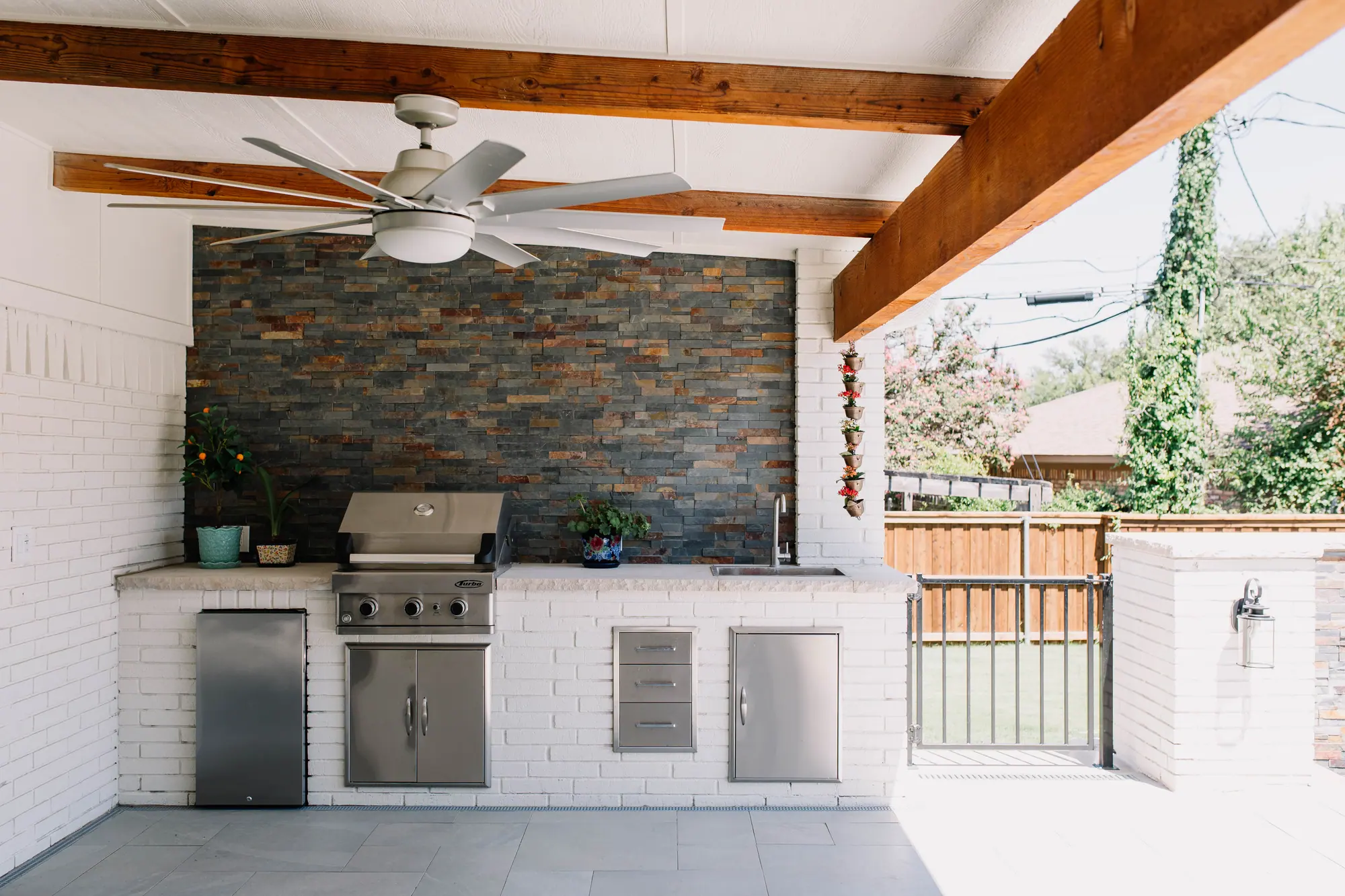
A portable grill rolled out of the garage, tongs in one hand, a drink in the other, nowhere to set a plate. A real outdoor kitchen, with a built-in grill, counter space, a fridge and ideally a sink, changes the July 4 party and every ordinary weeknight in May.
What to build: an outdoor kitchen, placed under the cover and next to the seating so the cook is part of the party.
Whatever doesn't work is easier to see on July 5 than on any other day.
Question 6: Were the Mosquitoes a Problem?
If you spent the evening swatting and spraying, it's worth planning for. A covered patio can take outdoor ceiling fans, and some homeowners choose to screen in a covered space entirely.
What to build: fans and the option of screening, designed into the covered structure rather than added later.
Question 7: Did You Have to Keep Going Inside for Everything?
Ice, plates, napkins, another drink. If the day was a steady trip between the backyard and the kitchen, the backyard is missing the basics.
What to build: a serving counter, a bar fridge and storage, built as part of the outdoor kitchen so everything you need is already outside.
Question 8: Was the Lighting Any Good After Sunset?
If the backyard went dark and everyone drifted inside, or the only light was one harsh floodlight, the space stopped working right when the evening cooled off.
What to build: fixtures in the cover, light where you cook and where you sit, warm color, on dimmers, planned with the cover rather than added after the ceiling is finished.
Question 9: Was the Grass Even Necessary?
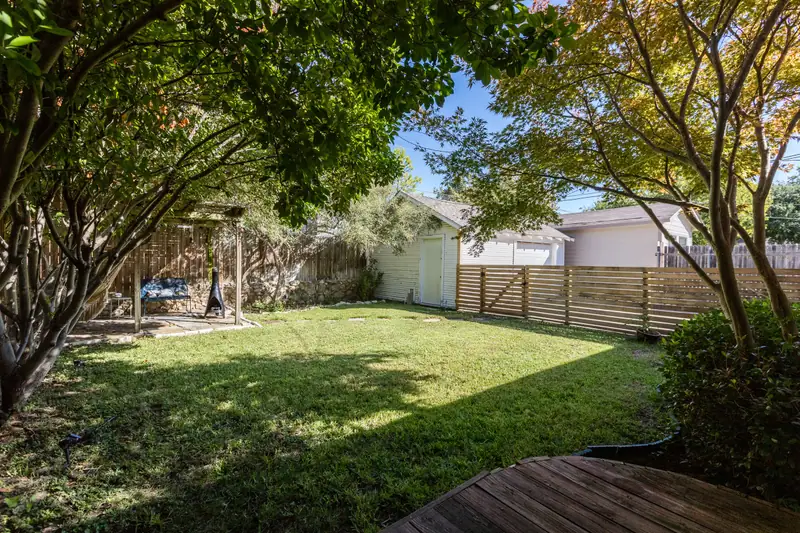
If most of your yard was grass nobody stood on all day, you're not alone. A bigger patio and more covered space mean less lawn to water and mow, and more yard you actually use. Our drought-aware outdoor living post covers that trade in detail.
Question 10: What Would Make July 4, 2027 Great?
Now the real point. If you could have the backyard you wished you'd had this weekend, what would it look like? Which of the nine questions above matter most for your family? That short list is your project.
The Runway to Next July
Most of what's on your list lands in our pool and outdoor range of $35,000 to $400,000, and a build like this usually takes three to seven months. We bill cost-plus with a transparent markup, and the real number comes from walking your yard. We take these on as one backyard project, not one piece at a time.
Start the design conversation this summer and there's time to plan it, build it, and be outside in it well before next July. Wait until spring and you're likely building through the exact months you wanted to be using it.
How to Start the Conversation
Take fifteen minutes this week. Walk the yard. Write down what worked and what didn't. Then bring the list to a meetup: we'll walk the yard with you and sketch the whole thing, from the shade to the kitchen to the lighting. We build pool and outdoor projects inside Fort Worth. See what we build.